Is Thailand Vegan-Friendly in 2026?
Is Thailand vegan-friendly? It’s a fair question.
Fish sauce goes into almost everything, shrimp paste hides in curry bases, and condensed milk has a firm grip on the country’s beloved coffee culture.
On paper, it doesn’t exactly scream plant-based paradise.
And yet. I’ve lived here as a vegan for over three years.
Right now my home is in a small town near the Myanmar border, about three hours from Chiang Mai, and I eat well every single day. My local Jay restaurant has a few old Thai aunties running the whole operation, and they keep me very well fed.
Thailand, if you know how to navigate it, can be one of the best countries in the world to eat plant-based. This guide will show you how.
This article contains affiliate links (paid links) and Veggies Abroad is a member of Amazon Services LLC Associated Program. At no cost to you, I may earn a small commission if you make a purchase — this helps keep Veggies Abroad churning out free content! For an explanation of our advertising partnerships, please review our privacy policy.
The Jay Tradition: The Most Important Thing a Vegan Can Know About Thailand
Jay, pronounced like the letter J, is a plant-based dietary tradition rooted in Chinese Buddhism that has been woven into Thai culture for centuries. But it goes far beyond just avoiding meat.
Practitioners also avoid pungent vegetables like garlic, onion, and shallots, which are believed to interfere with meditation. Yet the result is a cuisine that’s deeply flavorful, incredibly varied, and completely plant-based, all without ingredients you might assume were essential.
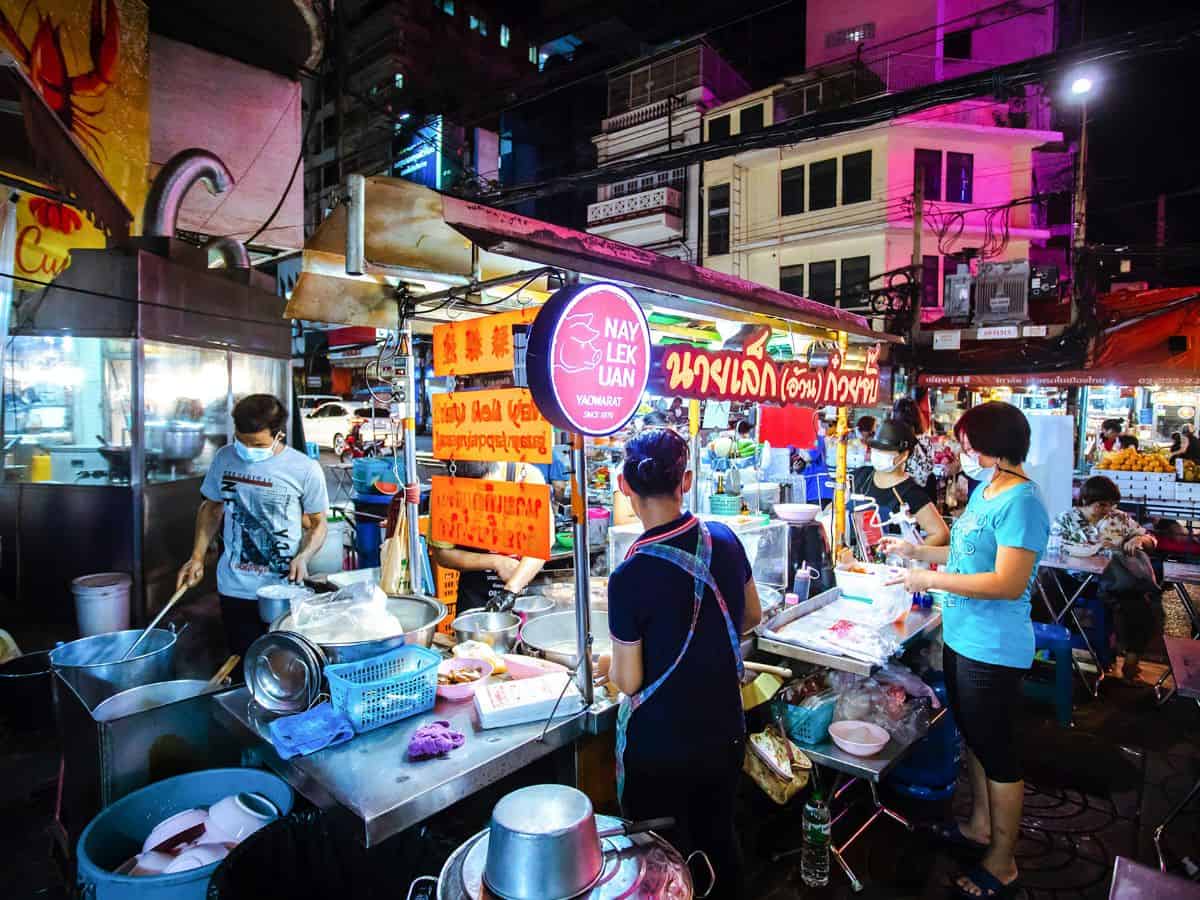
Jay restaurants are everywhere. Not just Bangkok, Chiang Mai, Phuket, but also the small towns that most tourists never visit. There is almost always one within reach, and eating there is the best way to experience authentic Thai vegan food at prices that seem absurdly low to us Westerners.
A full, satisfying meal for well under a couple of dollars is completely normal. Thailand without Jay restaurants would be a very sad place for vegans. They are the number one resource on your trip, period.
Most Jay restaurants are fully egg-free, but not all. A small number use eggs in certain dishes, so a quick check is always worthwhile.
In October, the Jay festival takes over Thailand, as almost the whole country becomes vegan for nine or ten days. It’s definitely the best time to visit.
Where to Stay in Thailand
Looking for a hotel that’s vegan-friendly? You’re actually in a lot of luck — there are some great options throughout Thailand.
Book Your StayHow to Find and Navigate a Jay Restaurant
Look for yellow flags or banners with red Thai lettering. On Google Maps, search either “vegan” or the Thai word เจ and check the photos to confirm before heading over.
Many of the bigger Jay restaurants operate on the khao rat gaeng system, a rice and curry setup where you walk up to a counter of dishes and choose what gets piled onto your plate. Usually it’s three dishes for just over a dollar.
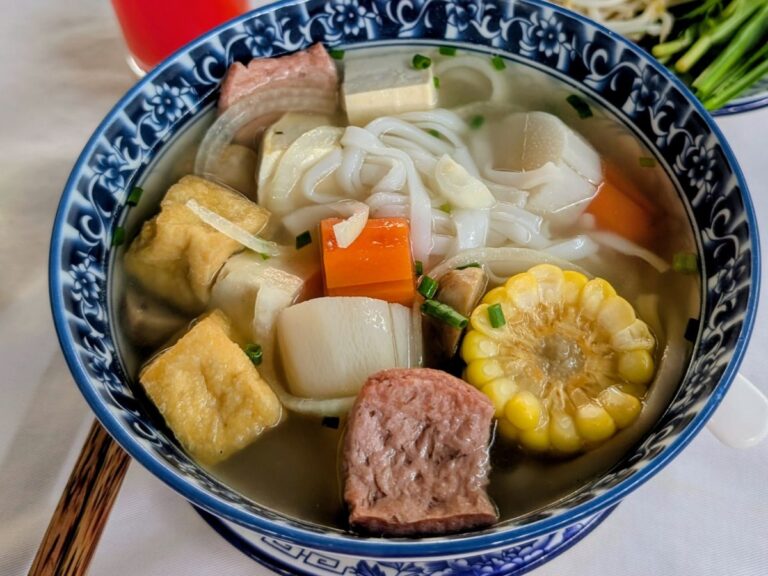
There will often be soups, noodle dishes, fried options like spring rolls and tofu, and sometimes cooked-to-order dishes too. But every Jay restaurant works a little differently, and that’s part of the charm.
Jay workers often don’t speak much English, but in my years here I have never met one who wasn’t warm, patient, and willing to help. Go in confidently, smile, point at what looks good, and enjoy it.
One cultural note worth knowing is that some Jay restaurants expect customers to bring their empty plates to a collection area when they’re done. It’s a communal thing. Please do the same.
But with the good does come one downside. Jay restaurants typically close in the afternoon and don’t serve dinner. Lunch and breakfast are well covered, and grabbing takeout to eat later in the evening is always an option. But for a sit-down evening meal with a drink, you’ll need to look elsewhere.


The Modern Scene and the Best Areas for Vegans
All over the country, Jay restaurants are your foundation. But in Thailand’s major cities, a wave of modern plant-based restaurants have emerged alongside them that give the country a serious edge over most of Southeast Asia.
Japanese ramen, Middle Eastern mezze, loaded vegan burgers, and plant-based Italian to name a few. You can eat world cuisine all week without repeating yourself.
These spots are pricier than Jay restaurants, but are mostly worth it, especially for evenings out. For Thai food specifically, Jay restaurants always do it cheaper and more authentically. But for variety, international cravings, and a proper dinner setting, the modern scene delivers.
Here’s where to prioritize your time as a vegan traveler:
The islands and Pai
Koh Samui, Koh Pha Ngan, and Krabi all have solid options and are well worth exploring if you’re combining beach time with your trip. Pai, a “hippy” mountain town in northern Thailand, also punches well above its weight for plant-based food.
Chiang Mai
My personal favorite, and the one I’d recommend first. Brilliant Jay restaurants, a thriving modern vegan scene, and an atmosphere that’s hard to beat. Check out our full Chiang Mai vegan restaurant guide.

Bangkok
The best for sheer variety. You can get everything here, though the city is more spread out than other places so some planning helps. See our Bangkok vegan guide for the top spots.

Phuket
I have a love/hate relationship with the island, but the food earns nothing but good vibes. Great Jay restaurants and solid modern options. It is the most expensive place on this list by a stretch. Our Phuket guide has you covered.
Eating Vegan Away from the Big Cities
But Thailand is so much more than its major hubs. If you only visit Bangkok, Chiang Mai, and Phuket then you’re barely scratching the surface of what this country has to offer. Getting off the beaten track is deeply rewarding. But as a vegan, it does take a bit more thought and planning.
Here’s what a typical day of exploring a more rural or small-town area might look like.
Morning
Keep some oat milk to hand for your morning coffee, maybe in a small flask. You can buy it from larger stores like Big C, Lotus, or Makro. Oatside is the best for me.
Then, head to your local Jay restaurant for breakfast. Rice and spice for breakfast is completely normal in Thailand, so try to embrace it. But if you’d prefer something plainer to start the day, most Jay spots will have options for that too. While you’re there, pick up a few extra dishes to take away for later.

During the Day
Grab snacks and drinks from 7-Eleven, some fresh fruit from a market stall or roadside fruit stand, and head out exploring.
Whether you ended up on a mountain, by the beach, or next to a temple, enjoy your lunch of 7-Eleven goodies and whatever you bought earlier from the Jay restaurant.
Dinner
You’ve got two solid options for the evening.
The first is to do a bit of research and find a restaurant nearby that has vegan options, or could easily adapt dishes for you. This could be a Thai restaurant where you ask for no fish sauce or oyster sauce, or a Western restaurant that tends to have more familiar, clearly labeled choices.
The second is to assemble a small dinner from 7-Eleven and then head to the local market. Wander through, scout out whatever vegan-friendly food you can find (more on that shortly), and if you fancy it, head to a bar for a drink with some peanuts or fries on the side.
Being away from the tourist hubs does make things more challenging. I won’t pretend otherwise. But it is so rewarding, and combining time in more local, off-the-beaten-track areas with stays in the bigger cities is genuinely the best way to experience Thailand. Learning a few Thai phrases helps enormously, and Google Translate should be a constant companion.

7-Eleven: The Vegan Traveler’s Secret Weapon
Vegan snacks in Thailand are hiding in the most unexpected place. 7-Eleven appears on almost every corner across the country, and for plant-based travelers it’s a genuine lifeline, especially when you’re away from the bigger cities. Here’s what to look for.
The cup and ice hack
Grab a cup from the counter, fill it with ice from the machine, pick your drink from the fridge, and take everything to the register. They’ll charge you for the drink and a small amount for the cup and ice. A lifesaver on a hot Thai afternoon.alangal, and herbs. Others taste a little milder than their non-Jay counterparts. It’s part of the experience.
Protein drinks
The refrigerated section has an impressive selection, many clearly labeled in English with plant-based branding. Great for breakfast on the go.

Nuts
Reliable, portable, and in every store. Essential when hunger strikes unexpectedly on a long day out.

Steamed buns
7-Eleven’s own brand vegetable and mushroom steamed buns are a great find. Ask the staff to heat them up for you behind the counter.
Instant noodles
Many Thai instant noodle options contain dried shrimp, so always check the ingredients. Shin Ramyun (yes, it’s Korean, but it’s everywhere here) is fully vegan and a great option. Add boiling water at the in-store hot water station, take it to the register, and you’re set.
Frozen vegan pad krapow & more
7-Eleven’s own brand does a frozen vegan pad krapow that’s solid. The staff will heat it up behind the counter and it comes out far better than you’d expect.

Chips and seaweed snacks
A great selection of both. Many chips are vegan, and the seaweed snacks are a light option for snacking on the go.

Konjac imitation squid
A bit of a hidden gem. Konjac-based imitation squid snacks are completely vegan, impressively textured, and a fun find.

Accidentally Vegan: Street Food You Can Grab Anywhere
Accidentally vegan Thai street food is more common than most people realize. Markets, walking streets, and roadside stalls across the country are full of naturally plant-based dishes that need zero adaptation.
At walking streets in bigger cities and even in places like Chiang Rai and Krabi, vendors with vegan dishes often mark them clearly, because they know tourists will be passing through. In more rural markets, use your initiative and try to communicate for clarity. Here’s what to look out for.
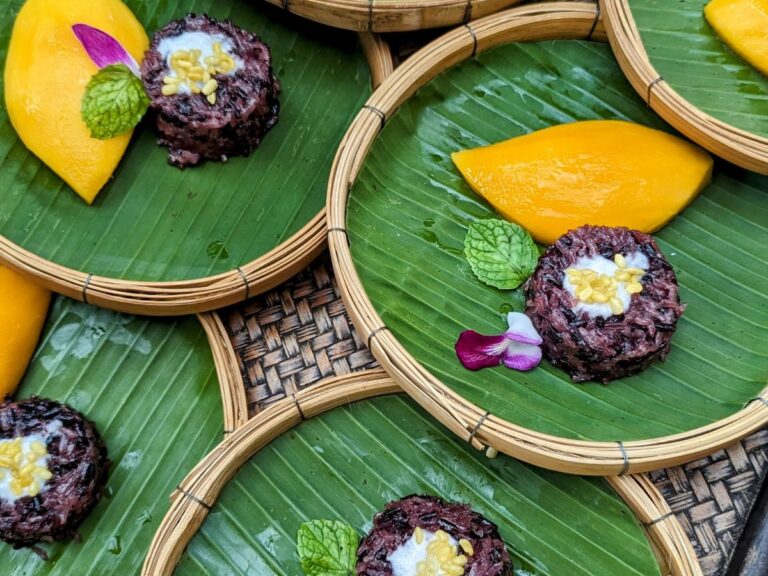
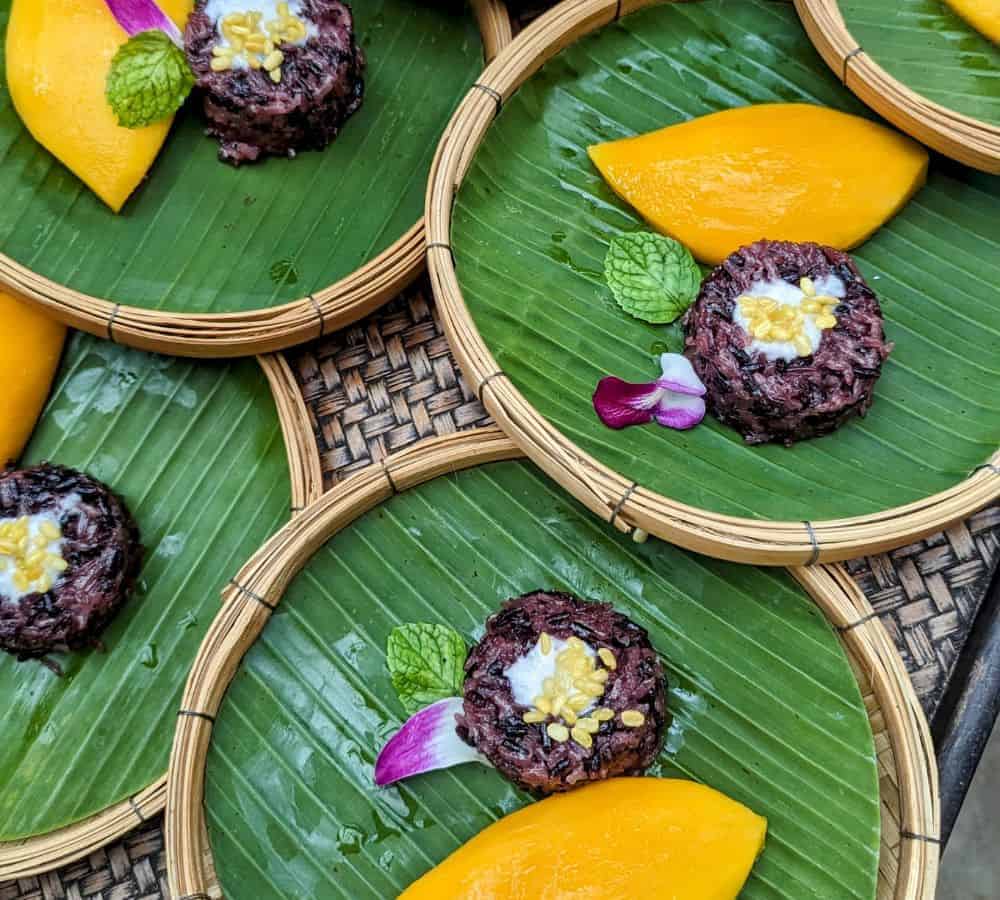
Mango sticky rice (khao niao mamuang)
Sweet sticky rice, fresh ripe mango, sweetened coconut milk. Completely natural for vegans, completely extraordinary, and available at stalls and markets all over the country.
Kanom krok
Coconut milk pancakes cooked right in front of you in a cast iron pan. Crispy outside, creamy and almost custardy in the middle, and completely addictive. You’ll smell the stall before you see it. My favorite is made with scallions but you can get it with corn and other fillings.
Chive dumplings (kanom gui chai)
Steamed or pan-fried dumplings filled with Chinese chives in a rice flour wrapper. One of those snacks that seems humble until you bite into one, and then you immediately want six more.
Sweet potato balls
Chewy, golden or purple, sesame-coated balls made from sweet potato and glutinous rice flour. Naturally vegan, endlessly snackable, and the kind of thing you end up buying a second bag of before you’ve finished the first.
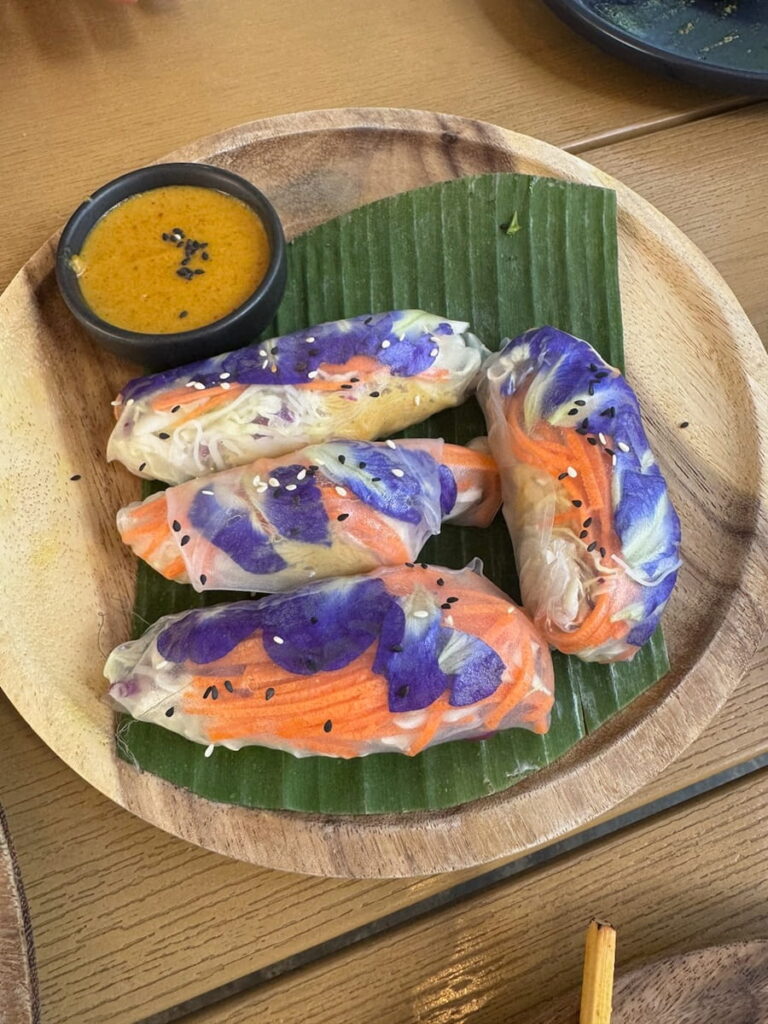
Samosas and spring rolls
Common at markets and stalls, and many versions are naturally vegan. That said, fillings can vary. Some spring rolls contain egg or chicken, and some samosas are filled with meat rather than vegetables. Always worth a quick check before diving in.
Watch Out For: Hidden Non-Vegan Ingredients
Fish sauce, oyster sauce, shrimp paste, and dried shrimp are the main ones to know about. They show up in curries, salads, stir-fries, soups, and noodle dishes, sometimes in places you’d never expect.
A papaya salad that looks completely plant-based might have fish sauce in the dressing. These ingredients can often be omitted if you ask. In Thailand, most people genuinely want to help, and if you communicate your needs clearly and politely, the majority of cooks and vendors will do their best.
If a dish arrives and something wasn’t omitted as requested, address it calmly and politely. Getting visibly frustrated or angry is very much against Thai culture and won’t help anyone. A quiet, courteous word always leads to a better outcome. And if someone simply isn’t willing to help, move on and find somewhere else.
So, Is Thailand Vegan-Friendly?
Yes. Genuinely, wholeheartedly yes. Jay restaurants are everywhere and they are extraordinary. The modern scene in the bigger cities is world-class. The street food has naturally vegan options hiding in plain sight. And 7-Eleven, bizarre as it sounds, is somewhere you’ll fall in love with.
Great food, incredible variety, a price point that makes your money go remarkably far, and a culture that’s passionate about what it eats in a way few places in the world can match.
Whether you’re coming for two weeks or considering making it your home, you can absolutely be vegan in Thailand. Go in with a bit of knowledge and a willingness to embrace the adventure, and it will be one of the best food experiences of your life.

Need Help Planning Your Vegan Thailand Trip?
If all of this sounds incredible but the planning feels overwhelming, you don’t have to figure it out alone.
Rebecca at Veggies Abroad is an all-in-one vegan travel planning extraordinaire and runs her own vegan tours worldwide, including in Thailand.
She can take all the stress out of traveling plant-based and make sure your trip is everything it should be.
Trust me, you’re in the safest of hands.
Thailand Travel Inspiration
If you’re exploring more of Thailand you might want to check out these articles.
The Most Vegan-Friendly Islands in Thailand
Where to Find Vegan Food in Bangkok
Ethical Elephants Sanctuaries to Visit in Thailand
The Best Spots for Vegan Food in Chiang Mai
Should You Visit Thailand or Vietnam: Which is Vegan-Friendly?