Complete Guide to Thailand’s Jay Vegan Festival
This article contains affiliate links (paid links) and Veggies Abroad is a member of Amazon Services LLC Associated Program. At no cost to you, I may earn a small commission if you make a purchase — this helps keep Veggies Abroad churning out free content! For an explanation of our advertising partnerships, please review our privacy policy.
Yes, the vegan festival in Thailand is very real.
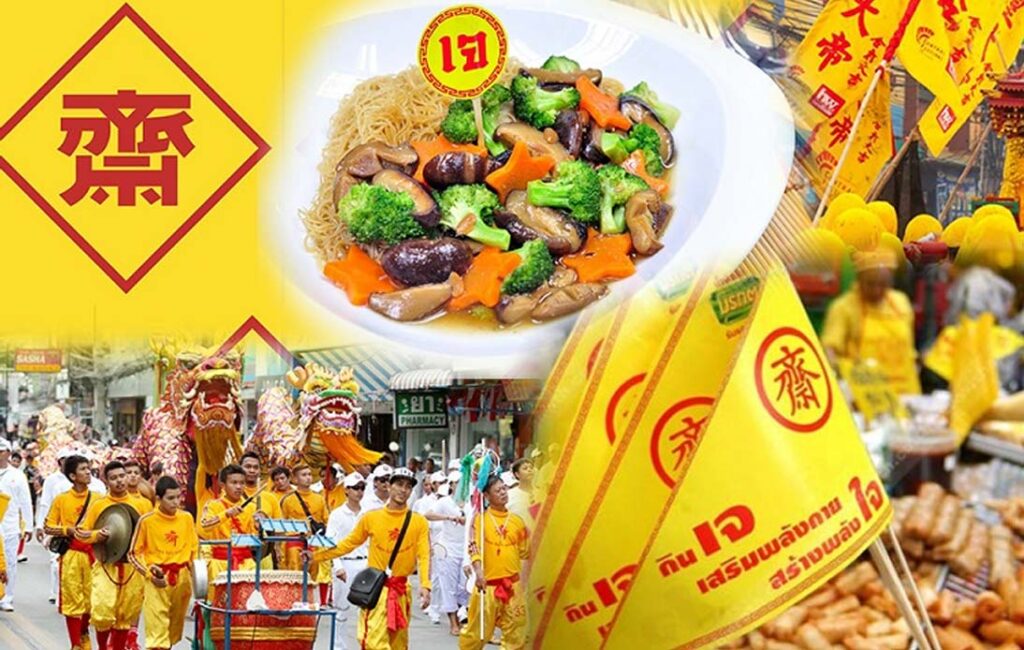
Once a year, something remarkable happens. For nine or ten days, a large proportion of the population goes vegan. Street stalls swap their pork and fish for plant-based versions of the same dishes. Convenience stores clear shelf space for special Jay-only products. Restaurants that have never considered a vegan menu put one on. And the yellow flag appears everywhere: a simple square with red Thai characters reading เจ.
This is the Jay Festival, also known as Tesakan Gin Jay or the Nine Emperor Gods Festival. For vegan and vegetarian travelers, there is no better time to be in Thailand.
I’ve lived here as a proud vegan for over three years, and it’s changed me. I now look forward to the Jay Festival more than Christmas, which makes what I did this year hard to defend. The festival kicked off on October 10, the exact day I had booked a flight to Vietnam, followed by a business trip to Bangkok. I’d managed to schedule myself out of the majority of the best week of the year. That takes real talent.
I still got my festival in the end, though. In previous years, I’ve chased it through the color and madness of Bangkok, Chiang Mai, and Phuket. This year, the best of it was waiting for me back home in the mountains of Chiang Mai province, and I’ll tell you all about it below.
That’s why this guide is two things in one: everything you need to plan your own trip, plus what the festival actually feels like on the ground, from someone who very nearly missed it this year.
What Is the Jay Festival in Thailand?
The Jay Festival is rooted in Chinese Taoist tradition. It honors the Nine Emperor Gods, deities embodied by the nine stars of the Big Dipper constellation, and is observed during the ninth lunar month of the Chinese calendar. The core practice is purification: of the body, the mind, and the spirit.
It isn’t originally Thai. It arrived with Chinese immigrants, mostly Hokkien and Teochew people who settled in places like Bangkok and Phuket, but Thailand has well and truly made it its own. Today it’s a Thai festival, celebrated by Thai-Chinese families, and Thais with no Chinese background at all.
How strictly people follow it varies. Some eat the odd Jay meal. Others do the full run without slipping once. Either way, thousands of people dress in white, give up meat, and spend their days at temples while the streets fill with yellow flags and food stalls.
A quick note on the word “Jay”: it does not simply mean vegan. A Jay diet excludes all meat, dairy, eggs, honey, and animal by-products, but it also cuts out five pungent ingredients: garlic, onions, chives, leeks, and asafoetida. These are believed to inflame the senses and cloud the mind. So Jay food is fully vegan, but with its own distinct flavor profile. Jay isn’t only a festival thing, either. Jay restaurants, with their bright yellow branding, operate all year round, and almost every town has at least one. For a vegan in Thailand, they’re a cheat code. The festival just turns that cheat code up to eleven.
Thailand Hotel Suggestions
Looking for somewhere to stay during the vegan fest? You’re actually in a lot of luck — there are some fabulous options throughout the country. Check out this vegan-friendly hotel guide to Thailand.
READ NOWWhen Does It Take Place?
Because it follows the lunar calendar, the dates shift every year, but it always lands in late September or October and runs for nine to ten days, starting on the first day of the ninth lunar month. In 2026, the festival ran from October 10 to 18. Vegan food options begin appearing at stalls and in shops a few days before the official start, so arriving slightly early is worth considering.
It’s also a great time to visit for non-food reasons, as the weather cools down and the rain finally stops.
The main lesson here is to check the lunar calendar before you book anything else. I did not, and you’ve already seen how that went.
In 2027, the festival will run from September 30 to October 8.
Where to Go in Thailand
The festival takes place all over Thailand, but the experience varies significantly depending on where you are.
Chiang Mai
Chiang Mai offers a quieter version of the same Jay spirit. Warorot Market and the Old City come alive with Jay stalls, and the atmosphere around the temples is genuinely lovely without the intensity of the south. A great option if you want to experience the festival without the overwhelm. Check out this vegan guide to Chiang Mai before you go!
Phuket
Phuket is the undisputed epicenter. Over 30% of the island’s population has Chinese ancestry, so this is a genuine community event rather than a tourist attraction. The rituals here are intense: firewalking, bladed-ladder climbing, and the famous body-piercing ceremonies in which devotees enter a trance-like state. The food vegan scene during the festival is extraordinary too. If you can handle crowds and early mornings, Phuket is unmissable. Book accommodation well in advance, as Phuket Old Town fills up fast.
Bangkok (Yaowarat / Chinatown)
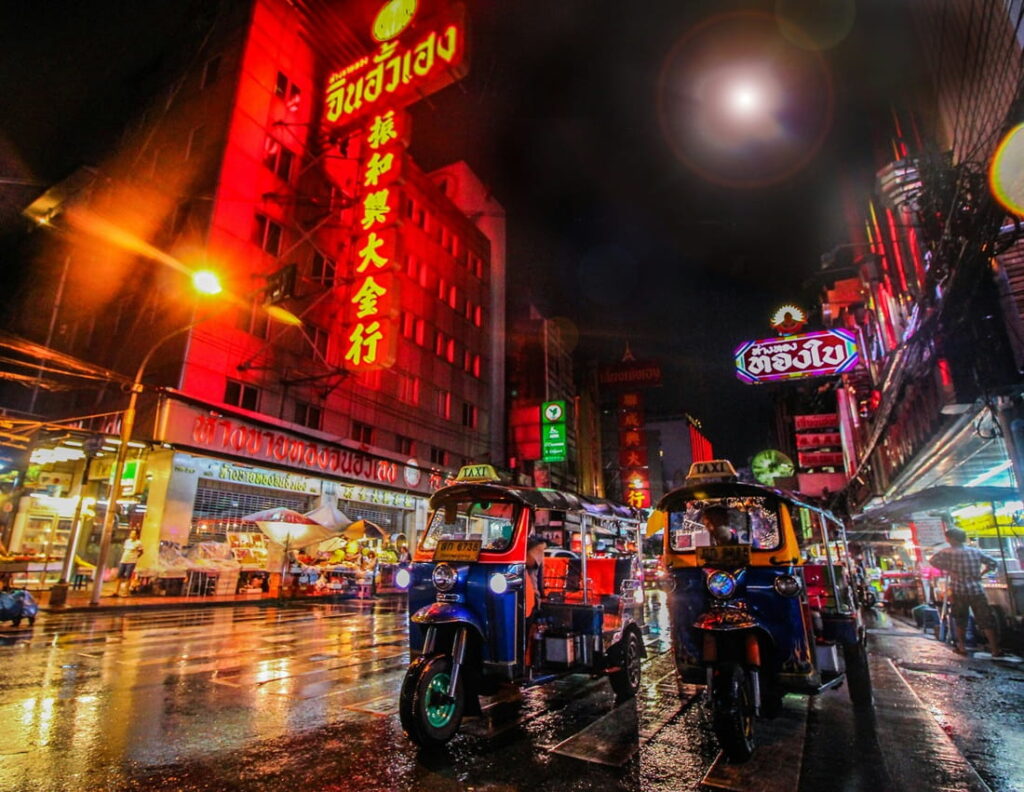
Bangkok is the best destination purely for food. Over 120 stalls line Yaowarat Road throughout the festival, and the variety is staggering: vegan dim sum, mock meat dishes, noodle soups, Chinese-Thai fusion, desserts. It’s more accessible than Phuket and far easier to navigate as a first-timer. For even more help with finding delicious vegan food in Bangkok, don’t skip our guide!
My own reintroduction to the festival this year came on the back of a motorbike taxi from Suvarnabhumi Airport, and there they were: Jay flags, out in full force. It’s by no means a takeover, but it’s far more than normal, and I loved seeing it.
Work kept me far busier than I’d have liked, but I did manage to reach a few food courts and a couple of street stalls, and they were brilliant. Bangkok is always a good city for vegans, but the festival gives you even more chances to eat authentic, local, street-food-style dishes you’d never otherwise find plant-based.
What to Expect: The Atmosphere
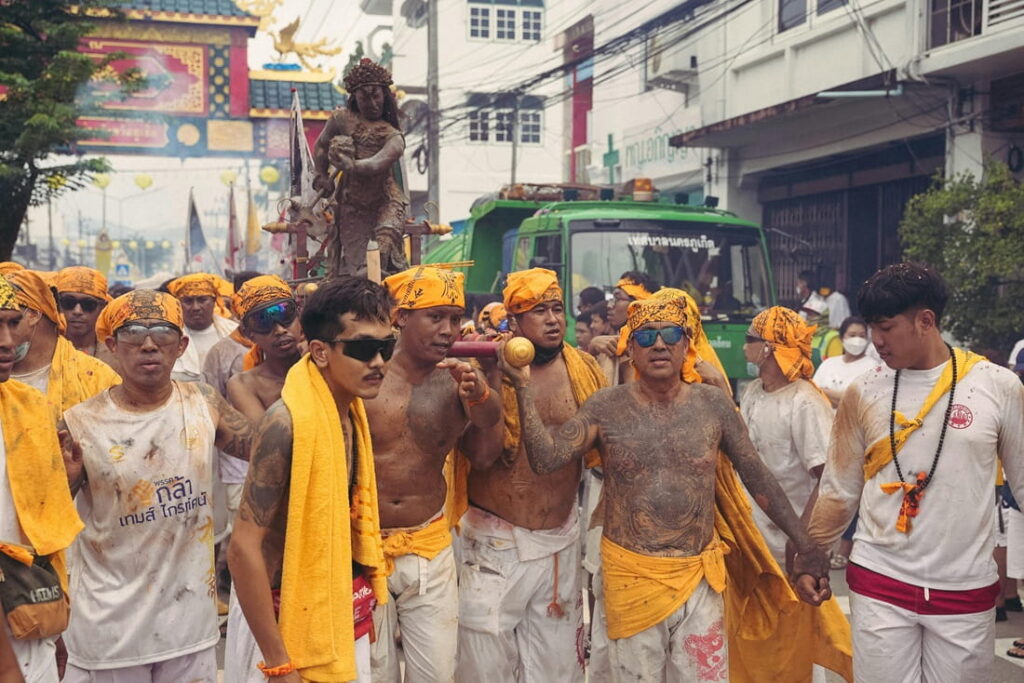
From the moment the festival begins, the streets change. Yellow flags appear on stalls, restaurants, and shop fronts. Firecrackers go off near temples. The smell of incense mixes with the smell of frying tofu. Devotees dressed in white, the color of purity during the festival, make their way to and from shrines throughout the day.
Temples and shrines become the social and spiritual heart of everything. There is chanting, percussion, offerings, and processions. In Phuket, the most dramatic rituals happen early in the morning near the major shrines, and an official schedule is released close to the festival. If you’d rather skip the intense ritual side and focus on the food, sticking to the afternoon and evening markets makes that easy.
In my experience, it’s worth wearing white if you plan to visit shrines or watch ceremonies. It’s not mandatory for visitors, but it shows respect and helps you blend in with the community rather than standing out as a spectator.
The Temple in Fang That Fed the Whole Town
That’s the big-city version. The best festival moment of my year happened in a much smaller place.
I live in Fang, Chiang Mai province, surrounded by mountains. It’s about as far north as you can go in Thailand, roughly 10 miles from the Myanmar border as the crow flies. We have exactly one Jay restaurant in town, and it’s basically my second home. When I walked in after my trips, it was packed with goodies: fried things, parcels wrapped in banana leaves, curries, noodles, sweets, everything you could imagine. I asked the owner, my Thai mom, whether she’d been busy. “Steady,” she said. Then she told me why it wasn’t busier: the Chinese temple.
The temple is on the outskirts of town, which in Fang means a three-minute drive from the center. For the festival, it had been converted into a factory of wonderful Jay food.
Picture a beautiful, wide-open space, almost like a factory floor with no machines, with a huge bright yellow shrine and multiple statues of Guanyin, known as the Chinese female Buddha and worshipped by Jay followers as the goddess of mercy and compassion. Now fill the whole place with big round tin tables and red plastic chairs, packed with everyone in town.
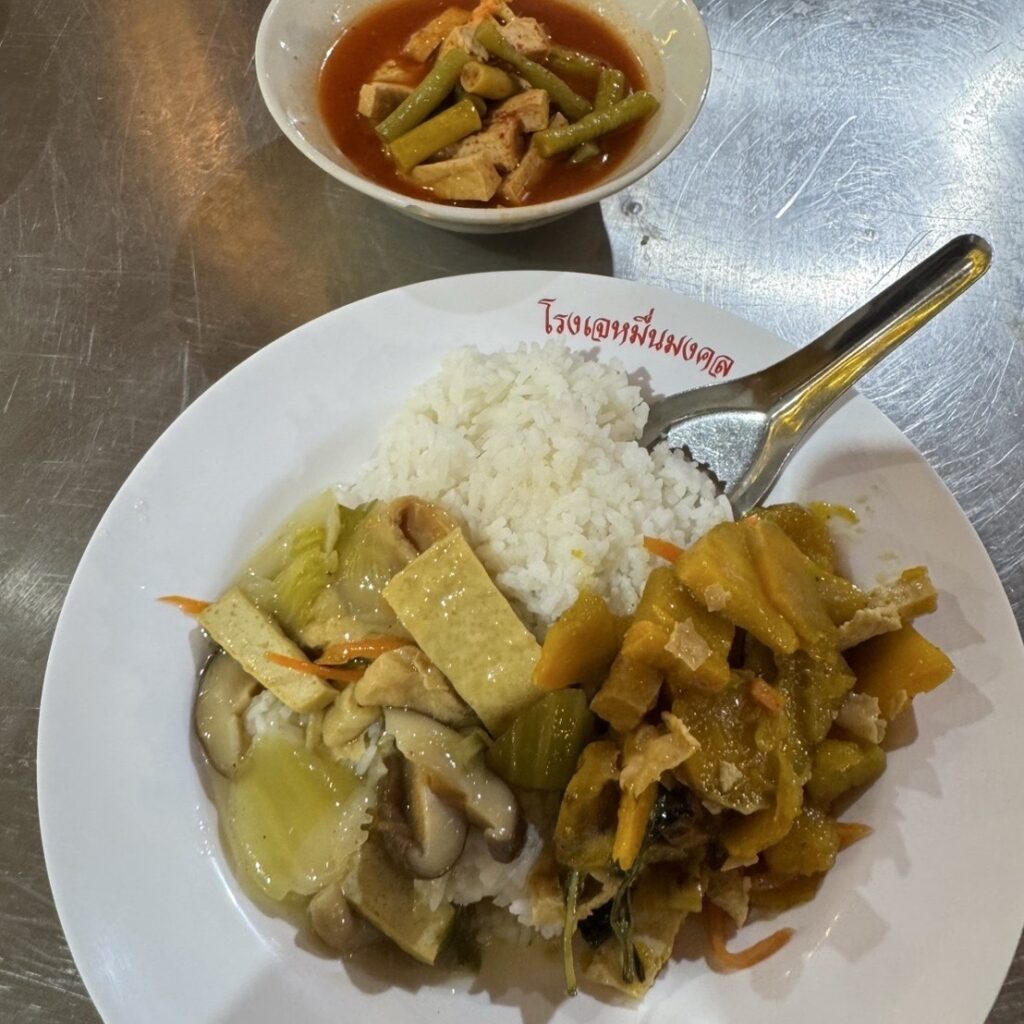
Along one side, a conveyor belt of volunteers dished out the food. You got a plate of rice, scoops of two different curries or stir-fries, a bowl of soup, and a bottle of water. All of it free. Breakfast, lunch, and dinner, for the entire festival.
As a big guy, I’ll admit my first thought was that the portion looked a bit small. But then I sat down. Surrounded by grateful, spiritual people, with the chatter and the clatter and the steam rising off the soup, I was completely full. I’m still not sure how.
The crowd was the best part. There were poor families, rich families, absolutely everyone in town. Most of them aren’t vegan the rest of the year, yet every single one was enjoying their meal. It was the best advert for vegan food I’ve ever seen, and I’m hopeful that a few of them keep eating this way long after the festival is over.
Outside, armies of worshippers dressed head to toe in white were chopping and cooking mushrooms, vegetables, and tofu on an industrial scale. All of it done with a smile. I stood there for a moment just watching them, thinking this might be the nicest thing I’ve ever seen anyone do for strangers.
So how do they afford it?
Fair question. I asked it too. Sponsors play a big part, and so do donations. A poor person might pay nothing all week, while one of my friends, who owns a coffee shop, donated around $300 even though she only ate there a handful of times. That’s a big number in Thailand. It all balances out, and it’s all very special.
I ate there as much as I could in the time I had. I played with the little kids, chatted with the old folks, and donated my fair share too. The food was delicious, the community was even better, and the fact that every bit of it was vegan made me ridiculously happy.
The Vegan Food: What to Look For
This is where the festival gets genuinely exciting for food-obsessed plant-based eaters (like me). The yellow flag is your guide. Anywhere you see it, the food is Jay. Look for the red Thai characters เจ (which can resemble the number 17). Once you know the sign, you’ll start seeing it everywhere: street stalls, market carts, restaurant windows, convenience store shelves.
Because Jay food excludes garlic and onions, the flavor profile is noticeably different from regular Thai cooking. Some dishes compensate beautifully with ginger, galangal, and herbs. Others taste a little milder than their non-Jay counterparts, but it’s usually all delicious and part of the experience.
Things worth tracking down:
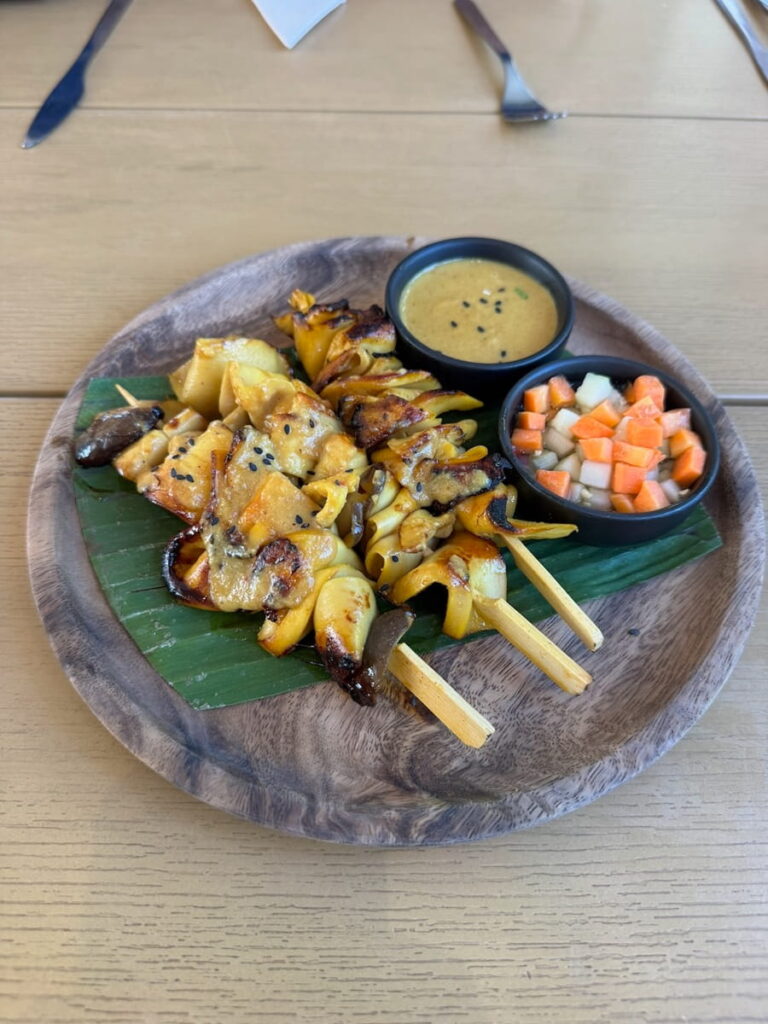
- Mock meat dishes: vegan versions of Thai classics like pad kra pao, larb, and boat noodles made with textured soy or mushroom protein
- Jay dim sum: particularly good in Bangkok and Phuket, where Chinese culinary traditions run deep
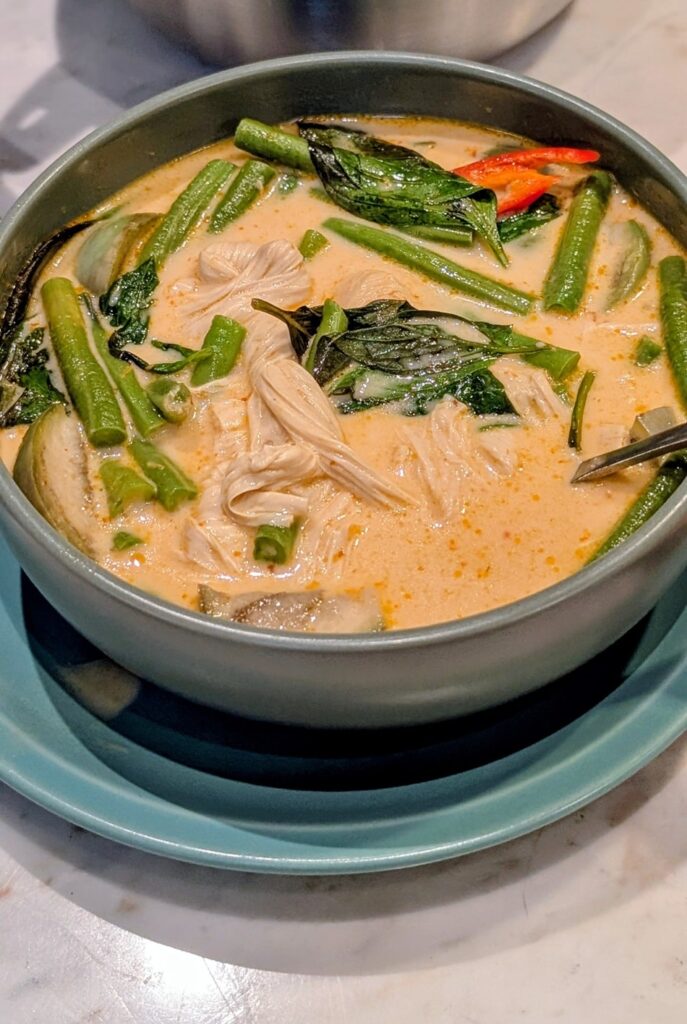
- Vegan versions of dishes that are normally impossible to eat plant-based, including tom yum, pad see ew, and kuay chap
- 7-Eleven’s annual Jay range: limited-edition instant noodles, microwave meals, and snacks only available during the festival and genuinely worth exploring
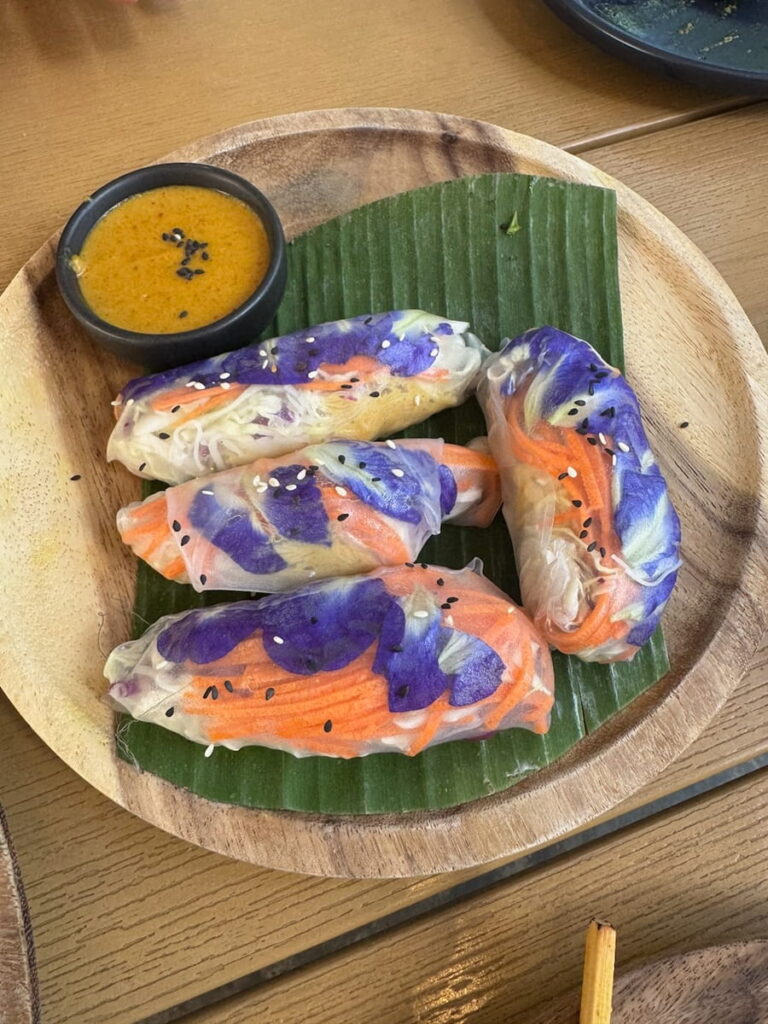
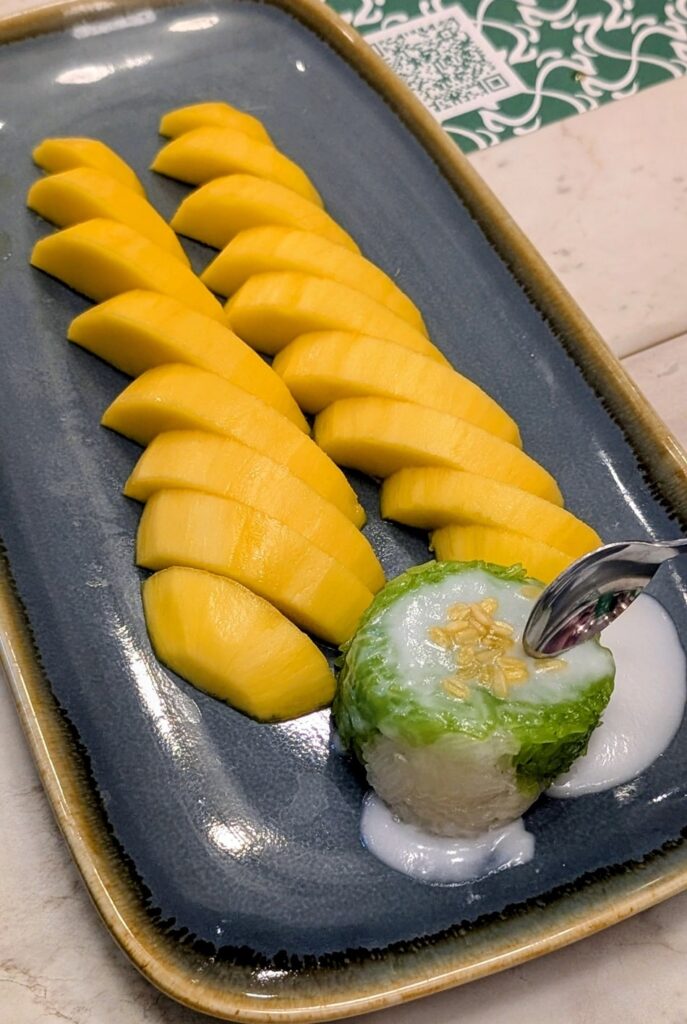
- Jay desserts: sticky rice sweets, coconut puddings, and banana-leaf-wrapped treats
A confession on that fourth one: with my schedule, 7-Eleven carried me through a lot of my Bangkok trip, and I worked my way through an alarming amount of microwaved, ultra-processed vegan junk. I certainly didn’t feel great after a few days of it, but have no complaints. More vegan options is more vegan options, and they’re usually all gone by mid-November.
The big brands have noticed the movement and taken full advantage. I even spotted a bottle of dishwashing soap proudly marketing itself as Jay, come on. But the heart of the festival isn’t on a supermarket shelf. It’s in the temples, the street stalls, and the little family restaurants.
Practical Planning Tips
Thailand is not always an easy country for vegans and vegetarians. Fish sauce turns up in places you do not expect it. “Vegetarian” menus sometimes include seafood. Navigating it requires constant vigilance.
During the Jay Festival, none of that applies. For ten days, the entire country is on your side. The food is extraordinary, the atmosphere is unlike anything else in Southeast Asia, and the cultural depth is far greater than a food event alone. The temples, the white-clad devotees, the incense, the firecrackers at dawn: it all adds up to something genuinely memorable.
- Book early for Phuket. Accommodation in Phuket Old Town sells out. Bangkok and Chiang Mai require no special planning.
- Arrive a few days before the official start. Jay products appear early and the atmosphere builds gradually.
- Keep an eye on Facebook groups like Vegans in Bangkok for updated restaurant lists and special menus during the festival.
- Do not worry about language. The yellow flag does the talking. If food is marked Jay, you can eat it with confidence.
- Do not, whatever you do, book a trip to Vietnam for opening day
If you’re planning a trip to Thailand, for the Jay Festival or otherwise, let Rebecca help. She’s an incredible vegan travel planner, and she would never let you accidentally schedule yourself out of the best week of the year.
As for me, I’ll be there next year. Properly planned this time. Probably.
Thailand Travel Inspiration
If you’re exploring more of Thailand you might want to check out these articles.
The Most Vegan-Friendly Islands in Thailand
Where to Find Vegan Food in Bangkok
Ethical Elephants Sanctuaries to Visit in Thailand
Where to Find Vegan Food in Krabi
Is Thailand Vegan-Friendly?