Accidentally Vegan Indian Foods
Ask someone to picture Indian food and they’ll probably land somewhere between a creamy tikka masala and a plate of samosas. Meat heavy on one end, deep fried on the other, and vegan nowhere in sight. It’s a fair guess. But it’s also almost entirely wrong.
India feeds more vegetarians than any other country on earth, and that culture didn’t skip the vegan crowd, it just buried us a little deeper in the menu. The tricky part isn’t finding food that’s powered by plants. It’s dairy, sneaking into dishes that look completely innocent on the plate. A curry can be built from tomatoes, onions, and a fistful of spices, then get finished with a spoonful of ghee or a splash of cream right at the end. Suddenly, the “vegetable curry” you ordered isn’t vegan anymore.
So here’s what I did. Instead of handing you a huge list padded out with dishes that need three modifications and a very patient waiter, I went the other way. Every dish below is naturally vegan at its core, built that way long before anyone started using the word vegan. No swaps, no special requests, no crossing your fingers. Some of these you’ll already know. Others will be completely new to you.
This article contains affiliate links (paid links) and Veggies Abroad is a member of Amazon Services LLC Associated Program. At no cost to you, I may earn a small commission if you make a purchase — this helps keep Veggies Abroad churning out free content! For an explanation of our advertising partnerships, please review our privacy policy.
India’s Dairy Problem: What We’re Up Against
A quick caveat, because I’d rather be upfront about it. I can’t promise every restaurant or street stall sticks to the traditional recipe. Some cooks may reach for a spoonful of ghee out of habit, or finish a dish with a dollop of curd because they’re feeling creative. What I can promise is that these dishes are vegan by design, and more often than not, that’s exactly how you’ll find them.
It’s also worth saying what didn’t make the cut. Vada pav, aloo tikki, and numerous other dishes came agonizingly close, all of which I’ve enjoyed plant-based on the right day at the right stall. But they’re not a safe bet everywhere, and this list isn’t about dishes that can be vegan with a bit of luck and a good tweak. It’s about the ones that already are.
Travel Inspiration
If you’re exploring more of Asia you might want to check out these articles.
The Most Vegan-Friendly Islands in Thailand
Is Singapore Vegan-Friendly? What to Know!
India For Vegans: The World’s Vegetarian Capital
The Best Spots for Vegan Food in Ho Chi Mihn
Complete Guide to Thailand’s Vegetarian Festival
Where to Find Vegan Food in Tokyo
Vegan Guide Seoul: Where to Eat

None of this means eating vegan in India is a losing battle, far from it. It just means going in with clear eyes about how central dairy is to the cuisine, so you can steer around it rather than being caught off guard by it.
Vegan Curries in India
Curries are the centerpiece of most Indian meals, but are also where dairy tends to do the most damage. These two dishes are the exception, built on vegetables, legumes, and spice rather than butter or cream.
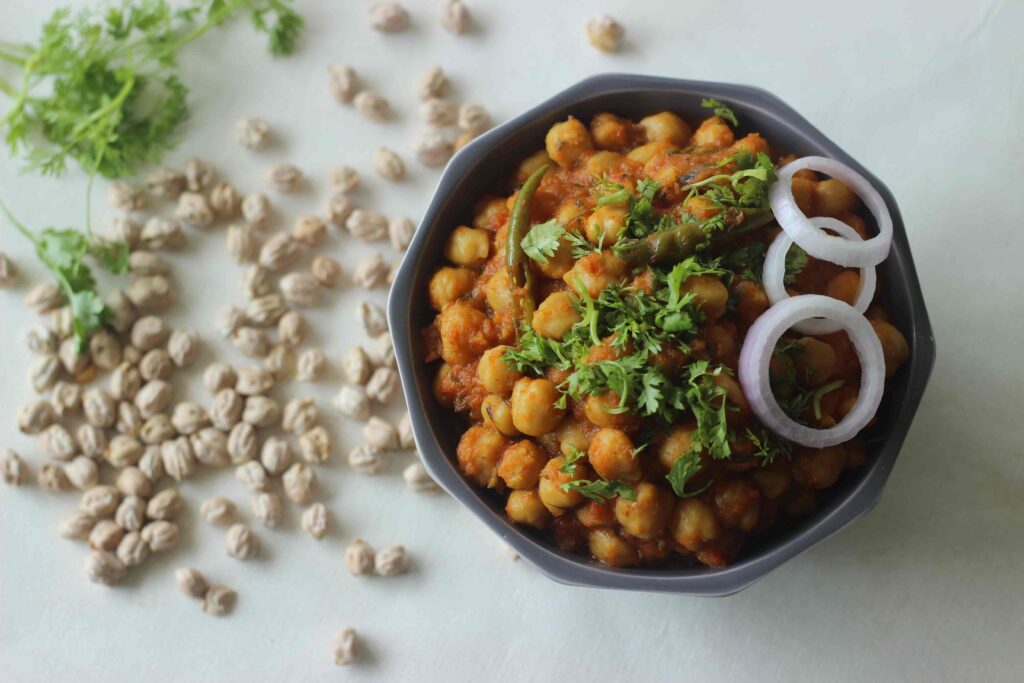
Chana Masala
You probably already know chana masala, it’s often the first thing vegans order when we sit down in an Indian restaurant back home. But until you’ve tried it in India, you haven’t properly experienced it. Chickpeas simmer down alongside tomato, onion, and a blend of spices until the sauce turns thick, glossy, and a little tangy. Although tempting to credit some secret ingredient for its magic, the real difference might just be where you’re eating it, a roadside spot with plastic chairs and a wobbly table as the world passes you by. It’s comfort food in the truest sense, and it never once needed dairy to earn that reputation.
Aloo Gobi
Compare aloo gobi to a standard plate of fries and vegetables and there’s really no contest, the spice and slow cooking here do something a Western kitchen rarely bothers with. It’s potato and cauliflower cooked low and slow with turmeric, cumin, and a handful of other spices until everything softens and takes on that deep golden color. It’s a home style dish more than a restaurant showstopper, the kind of thing you’re more likely to find ladled out in a family run kitchen or a no-frills local spot than dressed up on a fancy menu, dry rather than saucy, and vegan since the very first version anyone ever cooked it.
Vegan Street Food in India
This is where India shows off. Walk through any market or busy corner and you’ll hit a wall of frying, steaming, and shouting vendors, most of it built for eating standing up, in under two minutes, with your hands.
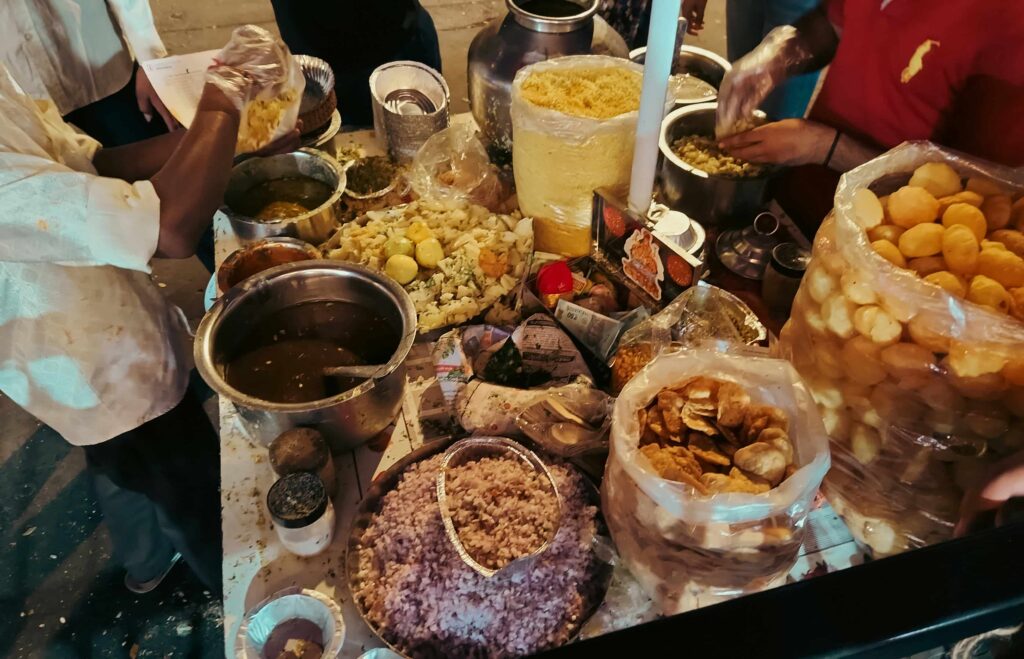
Bhel Puri
Stand on Chowpatty Beach at sunset and you’ll see bhel puri everywhere, vendors mixing bowl after bowl of puffed rice with a speed that makes it look effortless. Crunchy sev, chopped onion, and tomato are all tangled together with that puffed rice, tamarind chutney, and a hit of green chili. It’s Mumbai’s signature beach snack, sold from carts up and down Juhu and Chowpatty, built entirely on crunch and tang rather than anything rich or heavy, and it’s usually gone before you’ve made it back to the boardwalk.
Vegetable Pakora
The best comparison I can make to pakora is the humble fritter, yet it somehow manages to be deeply more complex, crispier, and infinitely more interesting than anything you’d get back home. All you need is chickpea flour batter, a handful of sliced vegetables, a hot pot full of oil, and years of experience knowing exactly when everything is perfectly done. Once the monsoon rains hit, pakora stalls seem to multiply overnight in every corner of India, the smell of hot oil pulling people out of the rain and under their umbrellas. A squeeze of lime, a chili on the side, and not a trace of dairy from batter to garnish.
Vegan Breakfast Options in India
India doesn’t really do a quiet start to the day, so I thought it deserved its own category. Even breakfast comes with spice, texture, and a bit of theatre, and the good news is that a huge amount of it never touches dairy to begin with.

Poha
Ask anyone from Indore what they grew up eating and poha comes up almost immediately, the city has practically built a breakfast identity around it, street carts piled high every morning with poha on one side and a sweet, syrupy jalebi on the other. It consists of flattened rice, softened rather than cooked, tossed with turmeric, curry leaves, and a scatter of roasted peanuts for crunch. You’ll find it plated up fast at small breakfast stalls right across Central India, but it’s really a home kitchen dish at heart, and dairy comes nowhere near it.
Upma
There’s a version of upma in basically every South Indian household, and somehow no two are quite the same, some looser and almost soupy, others dry enough to hold a spoon standing upright. It starts with semolina, roasted until it smells faintly nutty, then simmered with vegetables and a hit of mustard seed until it thickens into something between a porridge and a pilaf. You’ll get the no frills version fast and cheap at South Indian breakfast canteens, ladled straight off a steam tray, and it’s plant based by nature, not by accident.
Vegan Breads and Rice
Every Indian meal needs something to mop up the sauce or round out the plate, and these two carry that job without a scrap of ghee anywhere near them.

Jeera Rice
It rarely gets top billing on a menu, tucked in as a side rather than a main event, but a good plate of jeera rice can quietly outshine whatever it’s sitting next to. Basmati rice is tempered with cumin seeds fried in oil until fragrant, sometimes with a bay leaf or a bit of whole spice thrown in, and somehow every grain ends up separate, fluffy, and carrying flavor on its own rather than just soaking up whatever sauce is nearby. It’s a world away from the sad, clumpy side of rice that shows up with a takeout order back home, and there’s no ghee involved.
Puri
There’s a particular kind of joy in watching a piece of dough hit hot oil and balloon up into a golden pillow right in front of you, and it’s hard not to grin the first time you see it. Small discs of wheat dough, deep fried until crisp and golden, usually served alongside a potato curry at breakfast stalls, temple kitchens, and festival stands across the country. The dough itself is nothing more than flour, water, and oil. Some vendors do brush a little ghee on top for shine, so a quick glance or a question never hurts, but the base recipe has always been vegan.
Vegan Sweets
Indian sweets have a reputation, and most of the time it’s well earned, this is a dairy heavy category if there ever was one. But a couple of genuine standouts skip it entirely.

Til Laddu
Til laddu isn’t vegan by design so much as by accident, nobody set out to make a dairy-free dessert, it just turned out that sesame and jaggery never needed milk or ghee to work. Sesame seeds are toasted until fragrant, then bound together with melted jaggery and rolled into small, dense balls. You’ll see them piled high at sweet shops especially around Makar Sankrantimit, when they’re practically a tradition in their own right, and it’s never possible to only eat one.
Nariyal Barfi
Another dessert that landed on the vegan-friendly list without ever trying to is nariyal barfi, the traditional dry version was never built around condensed milk in the first place. Grated coconut is cooked down with sugar until it thickens and sets into a firm, chewy square, and that’s really the whole recipe. It’s the kind of thing you’ll spot in trays behind glass at a proper mithai shop, sold by weight and usually cut into neat little diamonds which are just asking to be eaten, and don’t let you down when you do.
Final Thoughts
Ten dishes, five categories, and (hopefully) not a single swap or special request among them. That’s the thing about eating vegan in India, once you know where to look, you’re not settling for the vegetarian option or asking the kitchen to leave something out. You’re just eating the food as it’s always been made.
If your stomach’s now rumbling and you’re itching to eat your way through India, you don’t have to plan it alone.