Complete Guide to Thailand’s Vegan Festival
Yes, the vegan festival in Thailand is very real.
Once a year, something remarkable happens.
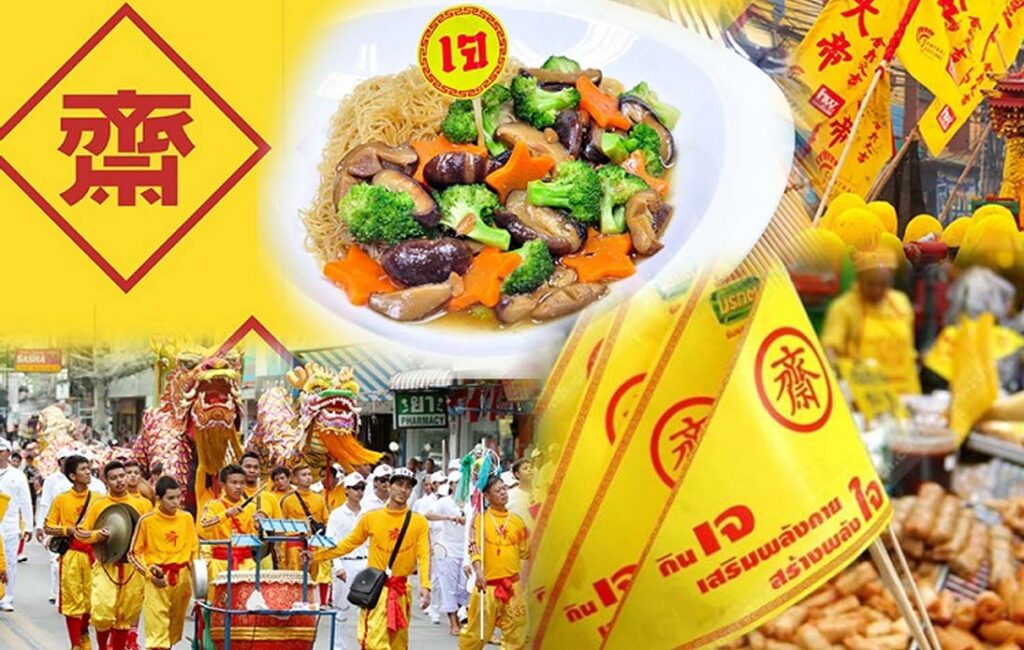
For nine or ten days, almost the whole country goes vegan. Street stalls swap their pork and fish for plant-based versions of the same dishes. Convenience stores clear shelf space for special Jay-only products. Restaurants that have never considered a vegan menu put one on. And the yellow flag appears everywhere: a simple square with red Thai characters reading เจ.
This is the Jay Festival, also known as Tesakan Gin Jay or the Nine Emperor Gods Festival. For vegan and vegetarian travelers, there is no better time to be in Thailand.
On a personal note, I’ve lived in Thailand for over three years now. As a proud vegan who does his best to fit in, but is nonetheless still a Westerner at heart, the Jay Festival has slowly become something I look forward to more than Christmas. Need I say more?
This article contains affiliate links (paid links) and Veggies Abroad is a member of Amazon Services LLC Associated Program. At no cost to you, I may earn a small commission if you make a purchase — this helps keep Veggies Abroad churning out free content! For an explanation of our advertising partnerships, please review our privacy policy.
What Is the Jay Festival in Thailand?
The Jay Festival is rooted in Chinese Taoist tradition. It honors the Nine Emperor Gods, deities embodied by the nine stars of the Big Dipper constellation, and is observed during the ninth lunar month of the Chinese calendar. The core practice is purification: of the body, the mind, and the spirit.
Thailand has an enormous Thai-Chinese community, and the festival is deeply woven into the culture here, far more so than in mainland China, where its popularity has actually declined. Millions of Thais with no Chinese background participate too, making it a genuinely national event.
A quick note on the word “Jay”: it does not simply mean vegan. A Jay diet excludes all meat, dairy, eggs, honey, and animal by-products, but it also cuts out five pungent ingredients: garlic, onions, chives, leeks, and asafoetida. These are believed to inflame the senses and cloud the mind. So Jay food is fully vegan, but with its own distinct flavor profile.
Thailand Hotel Suggestions
Looking for somewhere to stay during the vegan fest? You’re actually in a lot of luck — there are some fabulous options throughout the country. Check out this vegan-friendly hotel guide to Thailand.
READ NOWWhen Does It Take Place?
Because it follows the lunar calendar, the dates shift every year, but it always lands in late September or October and runs for nine to ten days. In 2026, the festival runs from 10 to 18 October. Vegan food options begin appearing at stalls and in shops a few days before the official start, so arriving slightly early is worth considering.
Where to Go in Thailand
The festival takes place all over Thailand, but the experience varies significantly depending on where you are.
Chiang Mai
Offers a quieter version of the same spirit. Warorot Market and the Old City come alive with Jay stalls, and the atmosphere around the temples is genuinely lovely without the intensity of the south. A great option if you want to experience the festival without the overwhelm. Check out this vegan guide to Chiang Mai before you go!
Phuket
Is the undisputed epicenter. Over 30% of the island’s population has Chinese ancestry, so this is a genuine community event rather than a tourist attraction. The rituals here are intense: firewalking, bladed-ladder climbing, and the famous body-piercing ceremonies in which devotees enter a trance-like state. The food vegan scene during the festival is extraordinary too. If you can handle crowds and early mornings, Phuket is unmissable. Book accommodation well in advance as Phuket Old Town fills up fast.
Bangkok (Yaowarat / Chinatown)
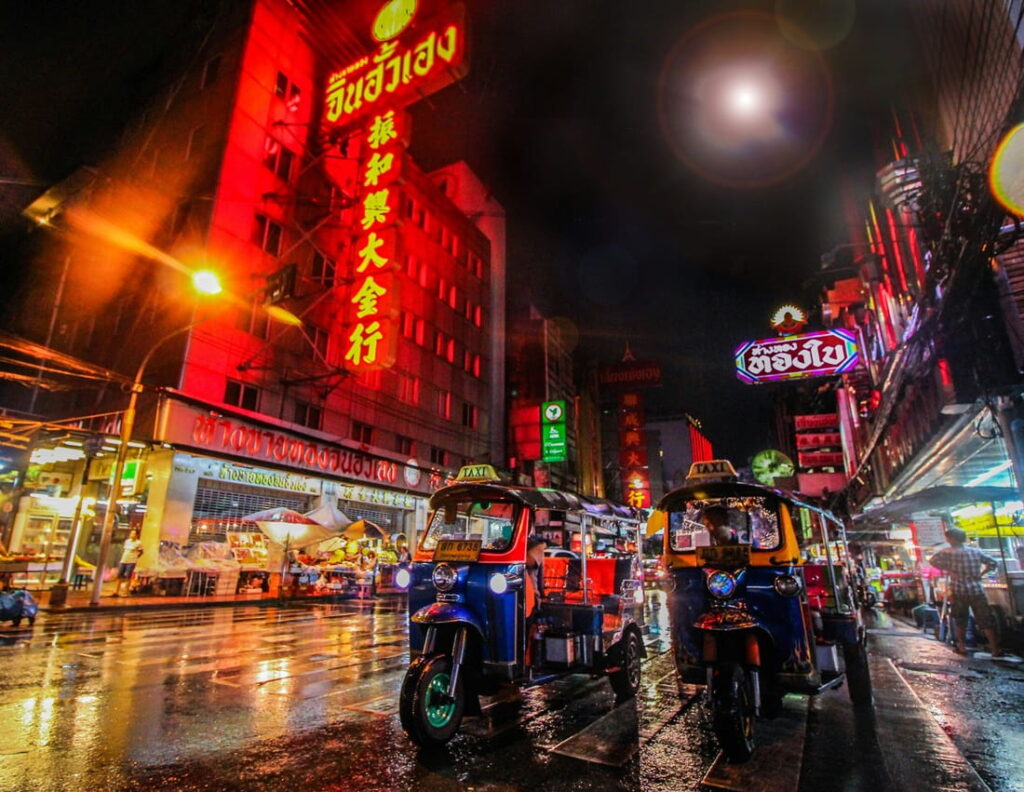
Is the best destination purely for food. Over 120 stalls line Yaowarat Road throughout the festival, and the variety is staggering: vegan dim sum, mock meat dishes, noodle soups, Chinese-Thai fusion, desserts. It’s more accessible than Phuket and far easier to navigate as a first-timer. For even more help with finding delicious vegan food in Bangkok, don’t skip our guide!
What to Expect: The Atmosphere
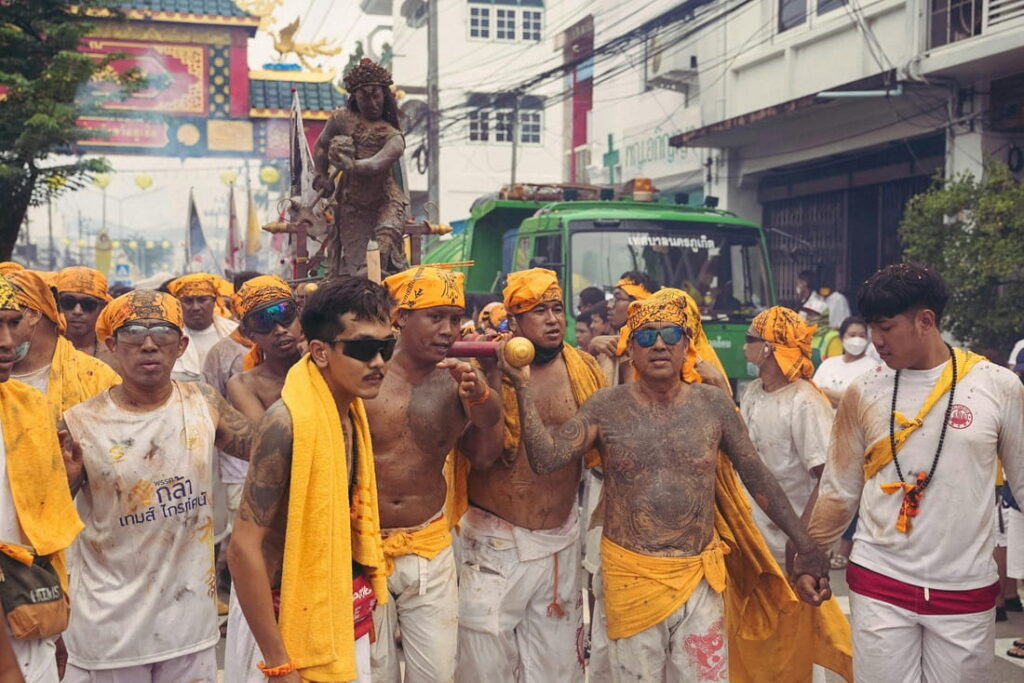
From the moment the festival begins, the streets change. Yellow flags appear on stalls, restaurants, and shop fronts. Firecrackers go off near temples. The smell of incense mixes with the smell of frying tofu. Devotees dressed in white, the color of purity during the festival, make their way to and from shrines throughout the day.
Temples and shrines become the social and spiritual heart of everything. There is chanting, percussion, offerings, and processions. In Phuket, the most dramatic rituals happen early in the morning near the major shrines. An official schedule is released close to the festival dates so you can plan accordingly. If you’d rather skip the intense ritual side and focus on the food, sticking to the afternoon and evening markets makes that easy.
In my experience, it’s worth wearing white if you plan to visit shrines or watch ceremonies. It’s not mandatory for visitors, but it shows respect and helps you blend in with the community rather than standing out as a spectator.
The Vegan Food: What to Look For
This is where the festival gets genuinely exciting for food-obsessed plant-based eaters (like me). The yellow flag is your guide. Anywhere you see it, the food is fully Jay. Look for the red Thai characters เจ (which can resemble the number 17). Once you know the sign, you’ll start seeing it everywhere: street stalls, market carts, restaurant windows, convenience store shelves.
Things worth tracking down:
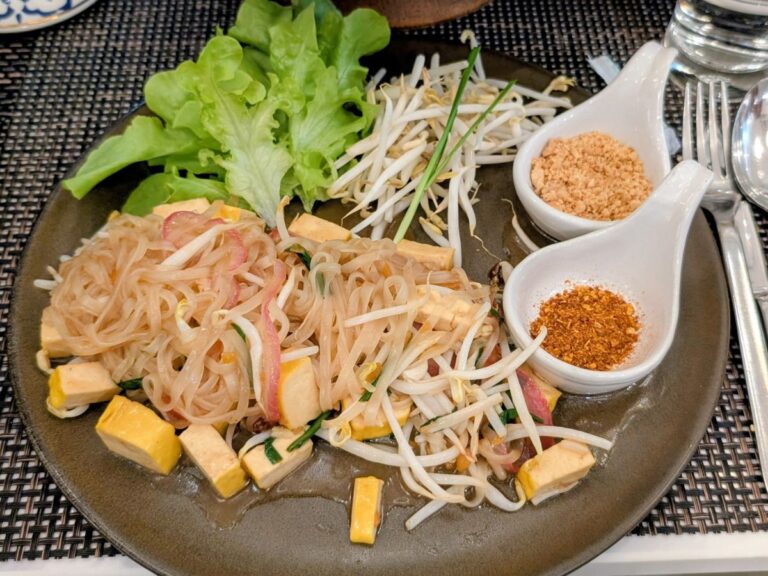
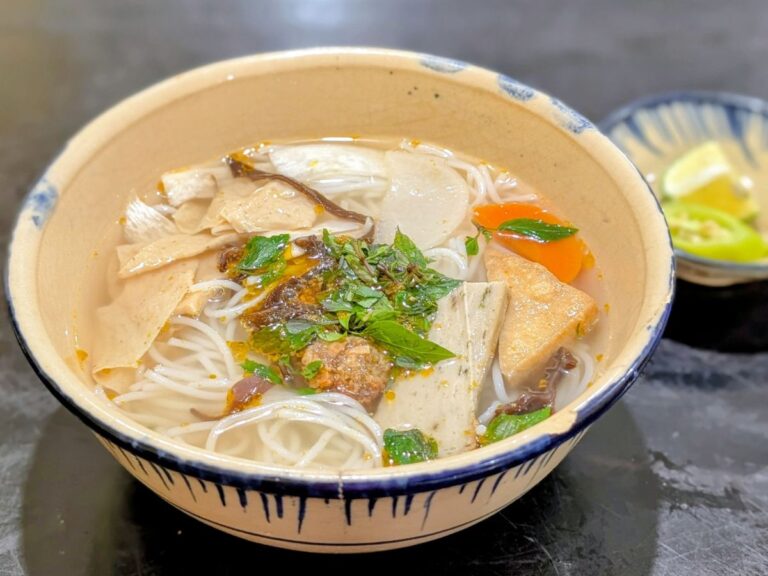
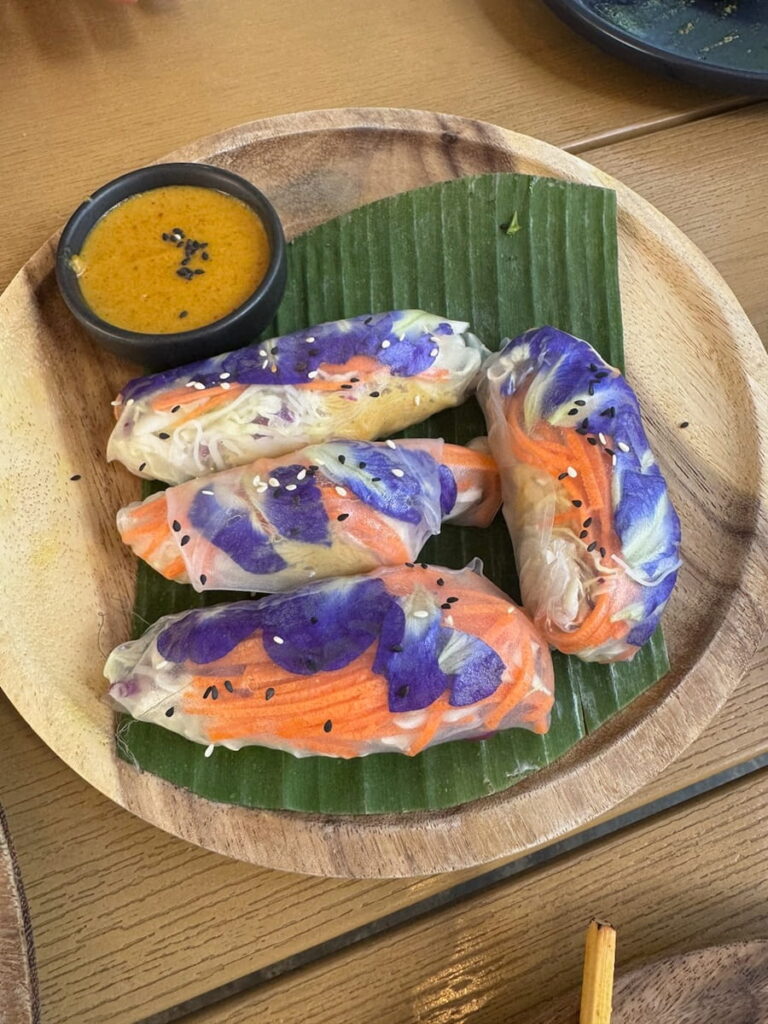
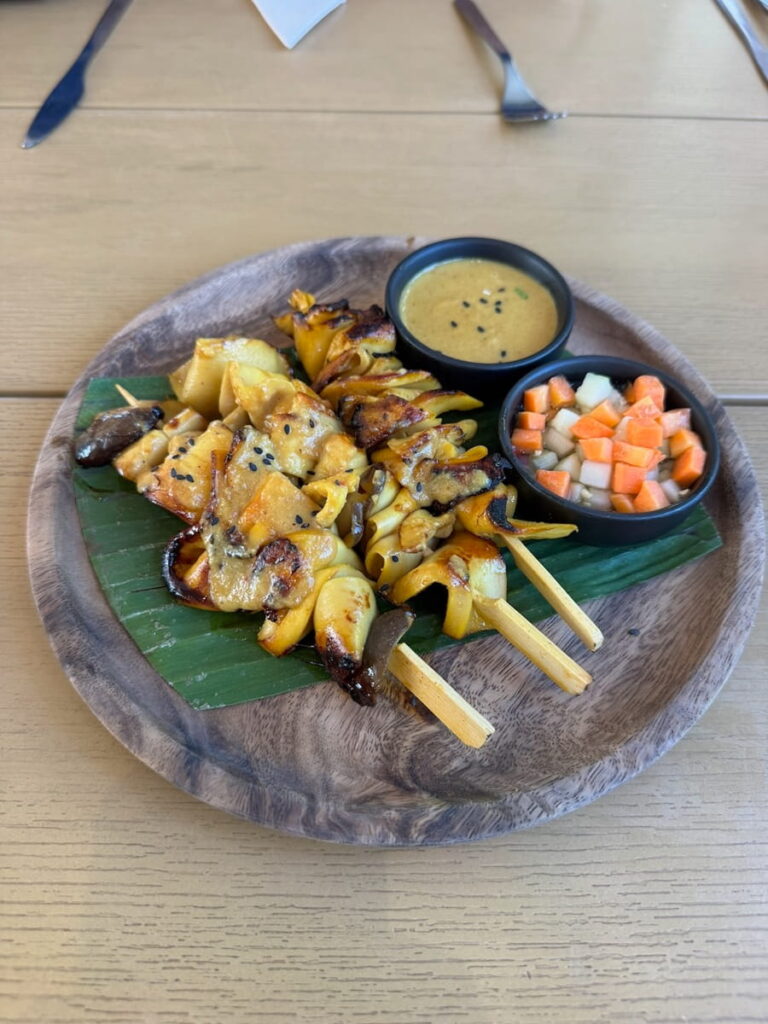
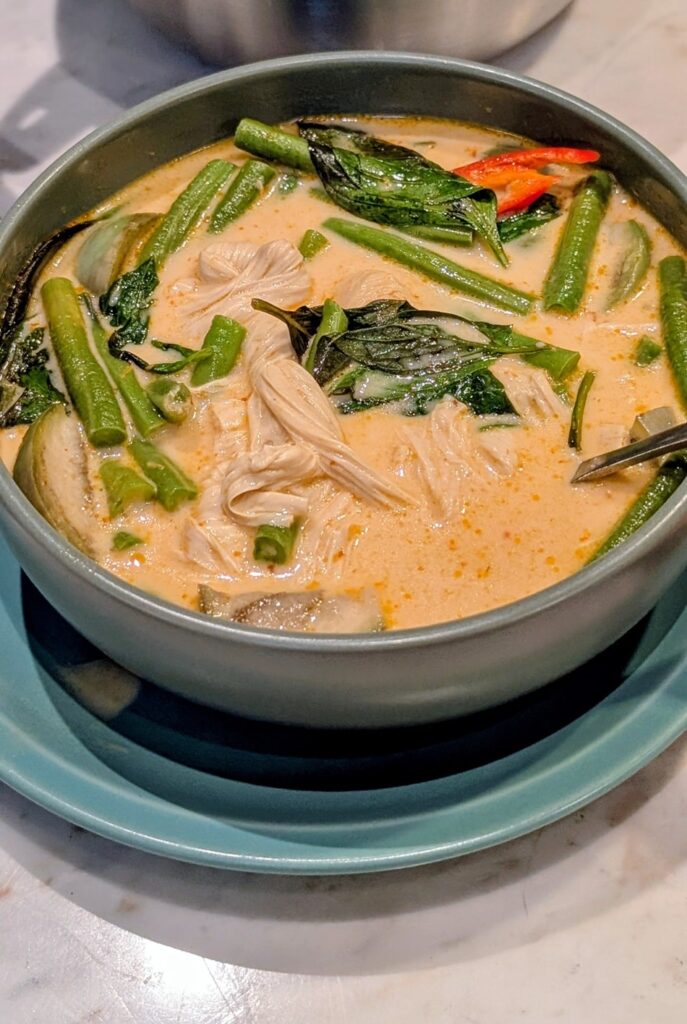
- Mock meat dishes: vegan versions of Thai classics like pad kra pao, larb, and boat noodles made with textured soy or mushroom protein
- Jay dim sum: particularly good in Bangkok and Phuket, where Chinese culinary traditions run deep
- Vegan versions of dishes that are normally impossible to eat plant-based, including tom yum, pad see ew, and kuay chap
- 7-Eleven’s annual Jay range: limited-edition instant noodles, microwave meals, and snacks only available during the festival and genuinely worth exploring
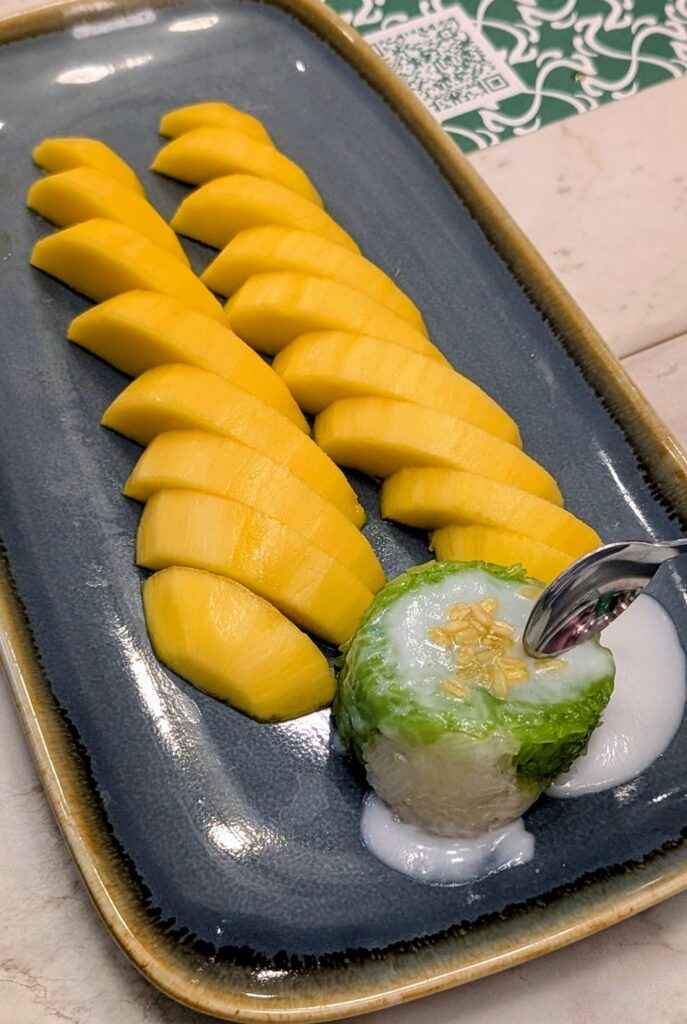
- Jay desserts: sticky rice sweets, coconut puddings, and banana-leaf-wrapped treats
One thing to be aware of: because Jay food excludes garlic and onions, the flavor profile is noticeably different from regular Thai cooking. Some dishes compensate beautifully with ginger, galangal, and herbs. Others taste a little milder than their non-Jay counterparts. It’s part of the experience.
Practical Planning Tips
Thailand is not always an easy country for vegans and vegetarians. Fish sauce turns up in places you do not expect it. “Vegetarian” menus sometimes include seafood. Navigating it requires constant vigilance.
During the Jay Festival, none of that applies. For ten days, the entire country is on your side. The food is extraordinary, the atmosphere is unlike anything else in Southeast Asia, and the cultural depth is far greater than a food event alone. The temples, the white-clad devotees, the incense, the firecrackers at dawn: it all adds up to something genuinely memorable.
- Book early for Phuket. Accommodation in Phuket Old Town sells out. Bangkok and Chiang Mai require no special planning.
- Arrive a few days before the official start. Jay products appear early and the atmosphere builds gradually.
- Go early in the day for ceremonies and save afternoons and evenings for the food markets.
- Keep an eye on Facebook groups like Vegans in Bangkok for updated restaurant lists and special menus during the festival.
- Do not worry about language. The yellow flag does the talking. If food is marked Jay, it is safe.
Thailand Travel Inspiration
If you’re exploring more of Thailand you might want to check out these articles.
The Most Vegan-Friendly Islands in Thailand
Where to Find Vegan Food in Bangkok
Ethical Elephants Sanctuaries to Visit in Thailand
Where to Find Vegan Food in Krabi