
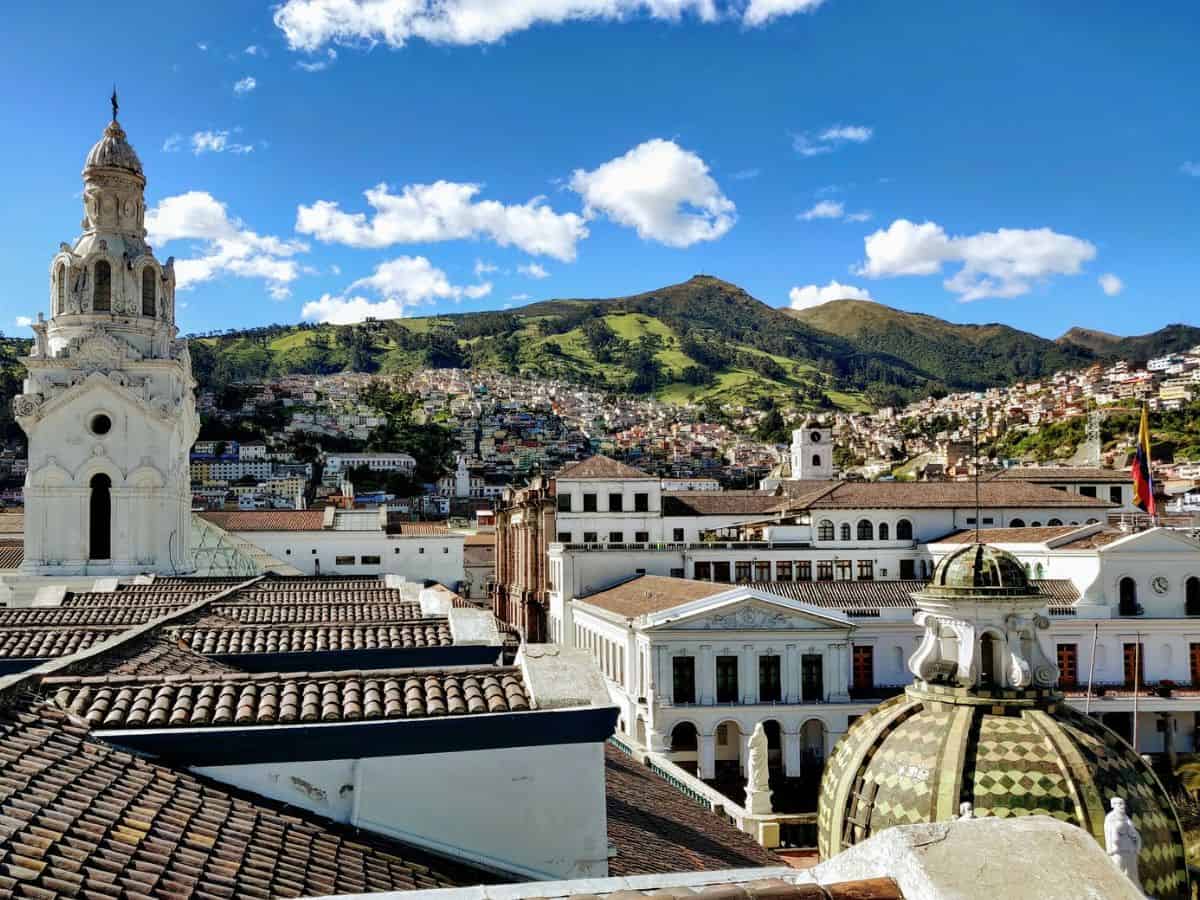
Is Ecuador Vegan-Friendly?
This article contains affiliate links (paid links) and Veggies Abroad is a member of Amazon Services LLC Associated Program. At no cost to you, I may earn a small commission if you make a purchase — this helps keep Veggies Abroad churning out free content! For an explanation of our advertising partnerships, please review our privacy policy.
“Sin carne, por favor.” (No meat, please.)
You say it slowly, in your best Spanish. The server smiles and nods. Ten minutes later, your plate arrives with a glistening piece of chicken resting on your rice.
Nobody got your order wrong. In Ecuador, carne usually means beef or pork. Chicken is pollo, fish is pescado, seafood is mariscos, and each one lives in a category of its own. You asked for no meat. Technically, you got no meat.
It’s a fitting welcome to a country that could feed half the world on plants. Ecuador is the planet’s biggest banana exporter. Its cacao goes into some of the most celebrated chocolate on earth. Its markets are piled high with incredible fruit you won’t find in any store back home.
The ingredients for a vegan paradise are everywhere. Getting them onto your plate without a side of cheese takes a little more work.

Will Vegans Starve: The Short Answer
You can eat well as a vegan in Ecuador. It just isn’t one of the world’s easy vegan destinations, and knowing that before you land will save you a lot of frustration.
The big cities, Quito in particular, have dedicated vegan and vegetarian restaurants. You’ll also find creative chefs and guesthouses happy to cook something special, as long as you ask the right way. Leave the cities, though, and the options shrink quickly. Out there, planning ahead is the whole strategy.
If you’ve ever traveled through Thailand, where Jay restaurants turn up in every province, or India, where entire menus are meat-free by default, recalibrate. Ecuador won’t hand you that kind of convenience or variety.
What it does offer is spectacular produce, set lunches that cost less than a latte back home, a handful of excellent vegan kitchens, and plenty of locals willing to help once they understand what you’re after. That last part is the tricky bit.
Why “Meat-Free” Rarely Means Vegan
The challenge in Ecuador is that veganism still isn’t widely understood.
Vegetarianism is more familiar, especially in the cities. Even so, a meat-free request is often read as “remove the obvious pieces of meat.” The chicken stock in the soup stays. So does the lard in the beans and the cheese crumbled over the top. To plenty of cooks, none of that counts as meat.
Dairy is the constant. Ecuadorian cooking leans hard on queso fresco, a mild fresh cheese that turns up in some of the country’s best-loved dishes:
- Locro de papa: the classic highland potato soup, thickened with milk and cheese
- Llapingachos: golden fried potato patties, stuffed with cheese
- Humitas: steamed fresh-corn cakes, usually made with cheese, eggs, and butter
- Empanadas de viento: puffed fried pastries, dusted with sugar and filled with cheese
Sweet breads, desserts, and drinks follow the same pattern. Order a batido and your fruit gets blended with milk. Order a jugo and it should come with water, though it never hurts to say so.
Then there’s manteca de chancho, pork lard. In the highlands, tostado (the crunchy toasted corn scattered over ceviche and served with soups) is traditionally toasted in it. Lard also finds its way into some breads, pastries, and pots of beans. It’s invisible on the plate, which is exactly why it trips people up.
A Quick Menu Glossary
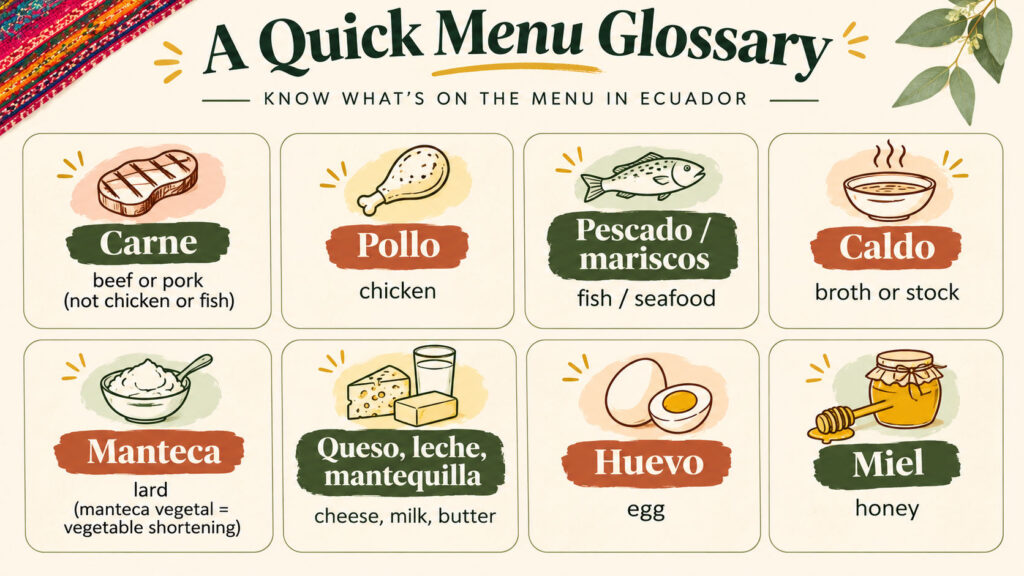
- Carne: beef or pork (not chicken, not fish)
- Pollo: chicken
- Pescado / mariscos: fish / seafood
- Caldo: broth or stock
- Manteca: lard (manteca vegetal is vegetable shortening)
- Queso, leche, mantequilla: cheese, milk, butter
- Huevo: egg
- Miel: honey
How to Order (and Actually Get a Vegan Meal)
Saying soy vegano (or vegana) is only the first step. The word means very different things to different people, so spell out exactly what you don’t eat. These lines work almost anywhere:
- “Soy vegano y no como carne, pollo, pescado, mariscos, huevos, lácteos ni miel”
I’m vegan and don’t eat meat, chicken, fish, seafood, eggs, dairy, or honey - “¿La sopa tiene caldo de pollo o de carne?”
Is the soup made with chicken or meat stock? - “¿Está cocinado con manteca de chancho?”
Is it cooked with pork lard? - “Un jugo en agua, sin leche, por favor”
A juice made with water, no milk, please
Smile, be patient, and expect a few follow-up questions. Most people want to help. They just need the full picture.
The Almuerzo: Ecuador’s Set Lunch
Those phrases also unlock the best-value meal in the country. Lunch is the main event in Ecuador, and nearly every neighborhood has small restaurants serving an almuerzo: a set menu of juice, soup, a main plate, and a little dessert, usually for $2.50 to $3.50.
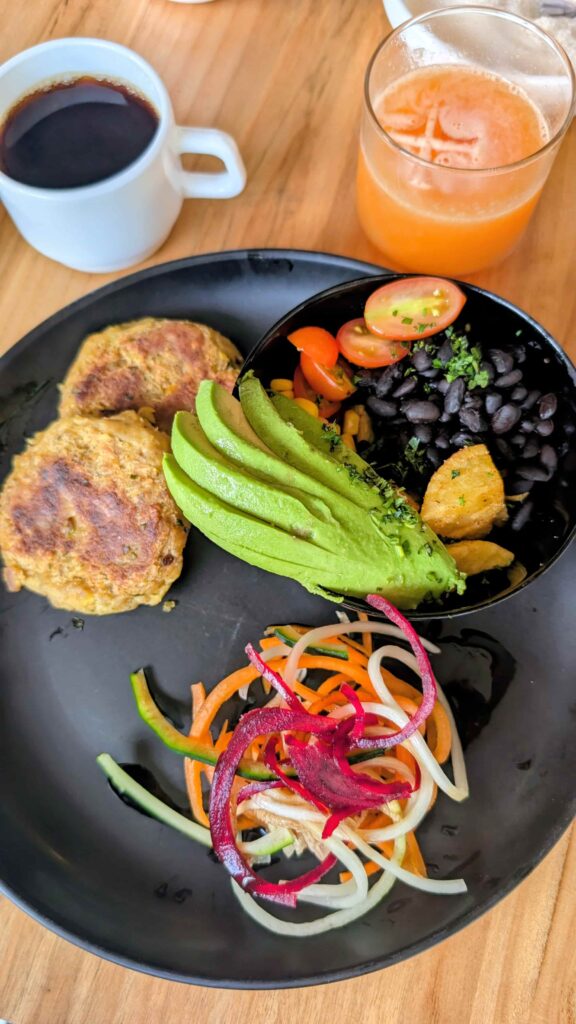
A standard almuerzo is built around meat, but its sides (rice, beans, lentils, avocado, salad, and fried plantain) are where vegans find their footing. Ask whether they can serve the plate without meat or chicken, then check how the beans were cooked.
Many cities also have vegetarian almuerzo restaurants. They make life easier, though not completely easy. A common pattern: the main and the juice are vegan, while the soup and dessert contain dairy or egg. Some kitchens will swap things around. Others will charge full price for half the meal. At three dollars, that’s still a bargain.
Ecuadorian Foods That Can Be Made Vegan
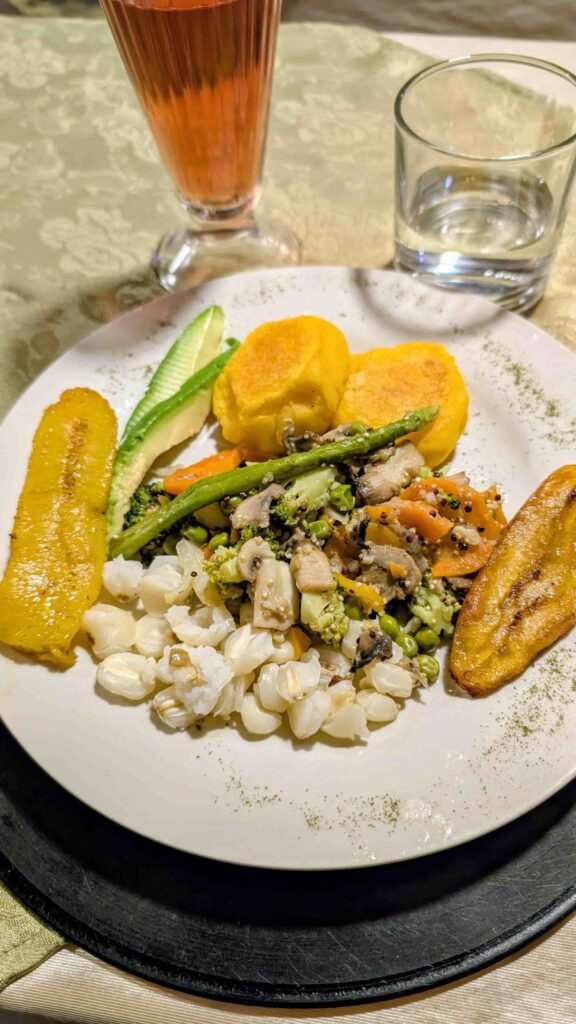
Plenty of local staples are vegan already, or very nearly. The rule of thumb: ask how a dish is prepared before assuming anything, because recipes change from region to region and kitchen to kitchen.
Ceviche de Chochos
Start here. Chochos are Andean lupini beans, a high-protein legume highland communities have relied on for centuries. In ceviche de chochos, often shortened to cevichocho, they’re tossed with lime and orange juice, tomato, red onion, and cilantro, then finished with crunchy corn and sometimes plantain chips.
It’s bright, tangy, and filling, and street carts sell it for pocket change. It’s also naturally vegan, with two small catches. The tostado on top may have been toasted in lard, and a heartier version called ceviche volquetero adds canned tuna. Ask, then enjoy.
Tigrillo
Tigrillo comes from Zaruma, an old gold-mining town in the south, and it’s now a national favorite. Green plantain is boiled, mashed, and scrambled in a hot pan. In 2020, it was declared part of Ecuador’s intangible cultural heritage.
The name supposedly comes from the char marks plantains picked up when they were roasted over coals, spotted like the coat of a small wild cat. The traditional recipe includes eggs and cheese, so the vegan version has to be requested. Some kitchens can leave them out or swap them.
Tortillas
Forget the thin wraps you know from Mexican food. Ecuadorian tortillas are small, thick griddle cakes made from corn, green plantain, or yuca. Recipes vary widely, and many contain cheese, eggs, or butter. Find a version without them, add beans, avocado, or vegetables, and you have a meal.
Plantains, Every Which Way
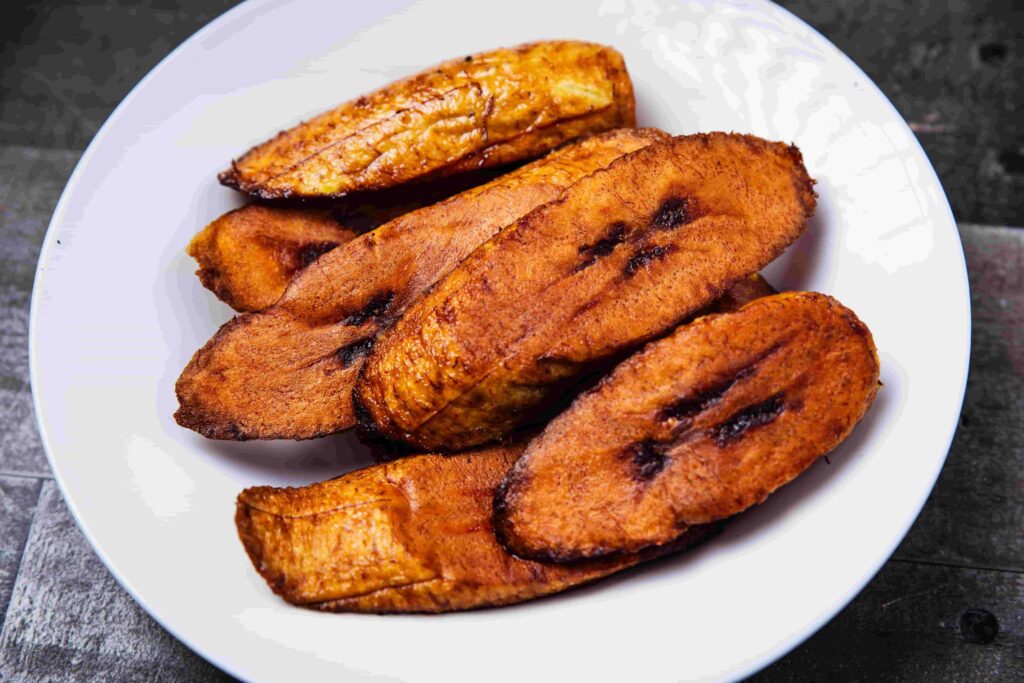
- Patacones: green plantain fried, flattened, and fried again
- Maduros: ripe plantain fried until sweet and caramelized
- Chifles: thin, salty plantain chips sold everywhere
All three are usually just plantain, oil, and salt. Bolón de verde, a fist-sized ball of mashed green plantain, is a different story. It’s usually stuffed with cheese or chicharrón (fried pork), so check before you bite.
Menestra
This thick stew of lentils or beans sits beside the rice on many almuerzo plates. It’s often just legumes, onion, pepper, tomato, cumin, and cilantro, though some highland versions are cooked with pork skin. Paired with rice, patacones, and avocado, it becomes one of the most dependable meals in the country.
The Building Blocks
Beyond specific dishes, these are the ingredients to build your meals around:
- Plantains, green and ripe
- Yuca (cassava)
- Corn (plain mote, or hominy, is fine, but mote pillo is scrambled with egg and mote sucio is fried in pork fat)
- Beans, lentils, and chochos
- Avocado
- Rice
- Fresh tropical fruit
That last item deserves more than a bullet point. Naranjilla tastes like a cross between citrus and rhubarb. Tomate de árbol tastes nothing like a tomato, despite the name. Then there’s maracuyá (passion fruit), guanábana (soursop), mora (Andean blackberry), and dozens more. Most of them end up blended into juice at every meal. Just remember: en agua (made with water).
If you’re visiting around Día de los Difuntos on November 2, look out for colada morada, a thick, spiced drink of purple corn flour and fruit. Traditional recipes don’t call for animal products, though a quick check is always sensible. The guaguas de pan served alongside it, sweet bread rolls shaped like swaddled babies, are usually made with milk, eggs, and butter.
Eating Vegan in Quito
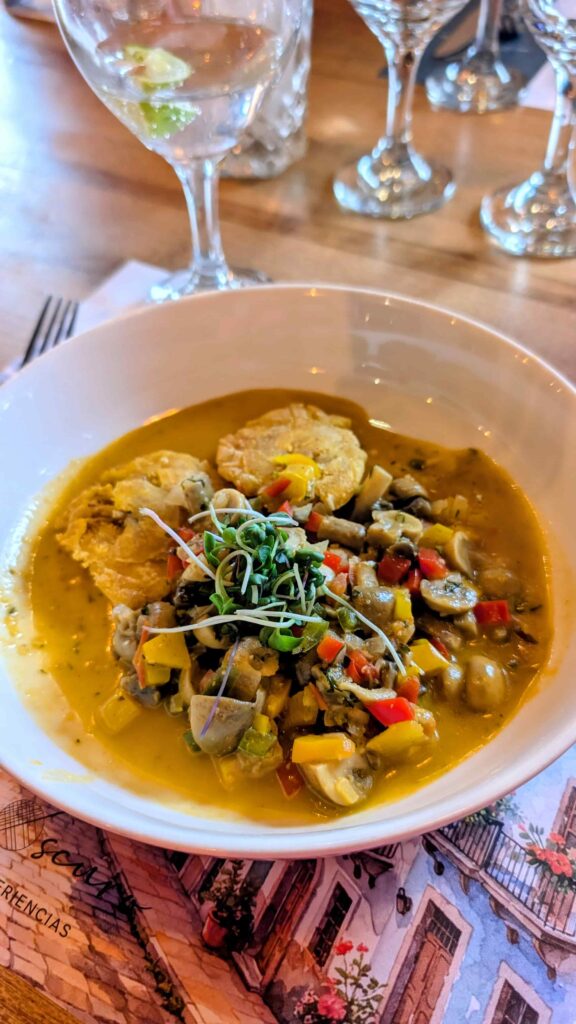
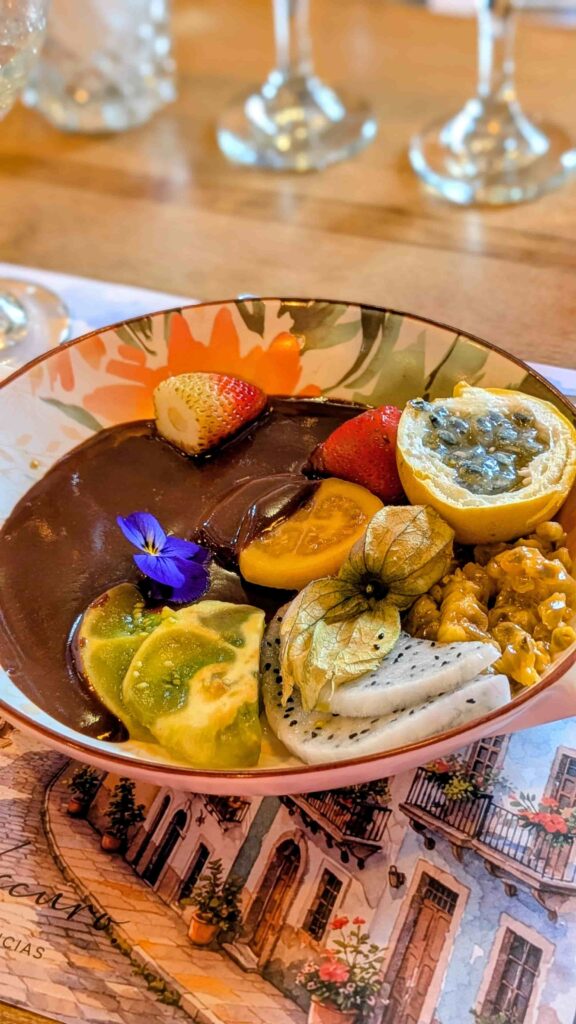
Quito is the easiest place in Ecuador to eat vegan, but it still rewards a plan. Four things to know before you start hunting:
The restaurants are scattered. You can’t wander one neighborhood here and pass five vegan cafés on the way. Quito stretches for miles along a narrow Andean valley, and its vegan and vegetarian spots are spread right across it.
Lunch is easy. Dinner is harder. Many vegetarian and vegan restaurants focus on breakfast and lunch, with limited or no dinner service, and several of the city’s most popular vegan kitchens close by late afternoon. Don’t assume a spot you found online will be open in the evening. Check the current hours, then line up a backup.
Getting around is simple, but slow. Uber works well across the city. The traffic doesn’t. A restaurant that looks close on the map can take far longer to reach than you’d expect, especially at rush hour.
If your time is short, research restaurants near your hotel or your sightseeing plans, and skip the cross-city trek for every meal. The Centro Histórico has a few options, but most of the vegetarian and vegan spots sit outside the historic center.
As for exactly where to eat and stay, that deserves a guide of its own. Our full rundown of vegan Quito, neighborhood by neighborhood, is on its way.
Beyond Quito
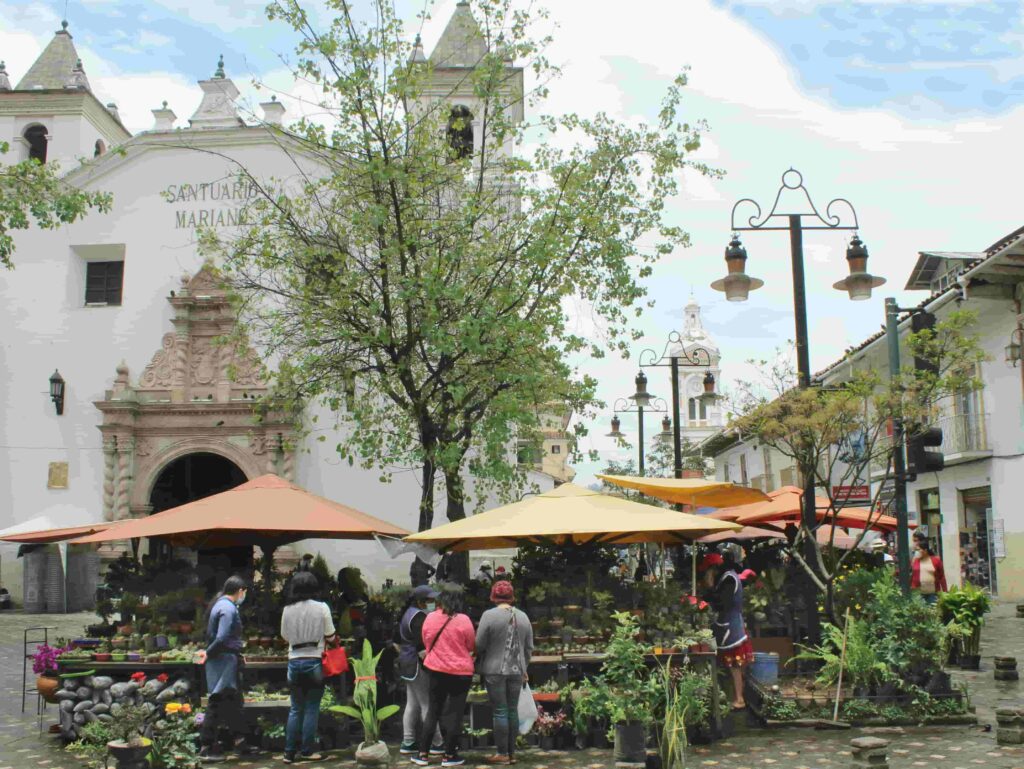
Outside the capital, a few towns stand out. In most others, the almuerzo and the fruit market will carry you.
Cuenca: The southern colonial city has the second-strongest vegan scene in the country, helped along by a large expat community. Fratello Vegan is fully vegan and, unusually for Ecuador, built for dinner. Comer Sanar Vivir’s vegetarian set lunch can be made vegan on request.
Baños: Ecuador’s adventure capital has a small, committed cluster aimed at backpackers. Sativa Studio Café (all vegetarian and very vegan-aware) and Casa Hood (clearly marked vegan dishes) are the reliable picks.
Mindo: This cloud forest village, famous for its birds and chocolate, is far more vegan-aware than its size suggests. Mishqui Quinde serves a mostly vegan menu, including plant-based takes on dishes from the Esmeraldas coast.
Vilcabamba: A wellness crowd in this southern valley has brought vegan cafés, juice bars, and even locally made almond and sesame milk.
Guayaquil: The country’s biggest city is thinner on options than you’d expect, and its vegetarian restaurants lean heavily toward lunch. Plan dinner before you arrive.
Lodges, the Amazon, and the Galápagos
In the jungle and the countryside, preparation decides how well you eat. Staying at a jungle lodge, a rural hotel, or any smaller property? Get in touch before you arrive.
- Spell it out: instead of writing “I’m vegan,” list everything you don’t eat, from meat, fish, and seafood to eggs, dairy, honey, and animal-based broths
- Ask what they can make: check whether they need notice to source ingredients, because a lodge hours up the Napo River can’t run to the store when you show up
- Follow up: confirm again a few days before your stay, and assume nothing has reached the kitchen until someone tells you it has
Do this, and the answer is usually yes. Amazon lodges in Cuyabeno and along the Napo routinely offer vegan meals with notice, and some remote properties have creative chefs who turn out fantastic plant-based food. Finding them takes research and a few emails. Precision matters here, too: in many Amazon communities, the signature dish is maito, fish wrapped in leaves and grilled over the fire. “No fish” needs saying as clearly as “no meat.”
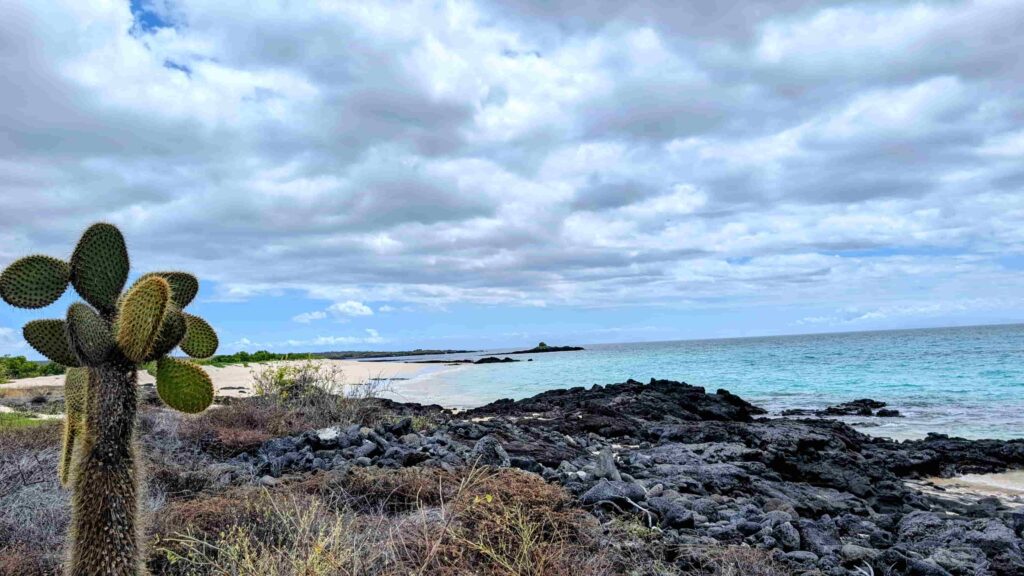
The Galápagos play by the same rules, only more so. Almost everything on the islands is shipped in from the mainland, so options are thinner and prices higher. Joining a boat? Tell the crew you’re vegan when you book, then confirm again before you sail. Where to eat on the islands, and what to pack before you fly, is coming up in our dedicated Galápagos guide.
Supermarkets, Snacks, and Small Wins
Some things are easier than you’d expect.
Plant milk is fairly easy to find in supermarkets, especially in the bigger cities, and almond is the most popular. Nearly all of it is imported, so expect to pay more than double the price of cow’s milk.
Plant-based meat has made it into big chains like Supermaxi and Megamaxi. Alongside the imported brands, you’ll find Veggie Deli, a line from one of Ecuador’s largest food companies.
Chocolate might be the biggest win of all. Pacari, founded in Quito in 2002, makes every bar dairy-free and certified vegan, using the country’s prized Arriba Nacional cacao. It has picked up hundreds of international awards along the way. Buy more than you think you need.
Markets are where Ecuador’s produce shines brightest. Fruit, avocados, and cooked chochos cost very little, and a bag of fruit with a cup of chochos makes a perfectly respectable lunch.
Money is simple for American travelers. Ecuador uses the US dollar, so there’s no awkward exchange rate to work out every time you sit down for your almuerzo.
So, Is Ecuador Vegan-Friendly?
Not especially. That isn’t the same as difficult, though, and the distinction matters.
You can eat very well in Ecuador. There are dedicated vegan restaurants in Quito and Cuenca, set lunches for a few dollars, plantains in a dozen forms, and chocolate that will spoil all other chocolate for you. What you won’t find is a vegan scene that does the work for you.
Here, eating well comes down to clear communication, a little Spanish, and planning ahead, especially for dinner and anywhere rural. Put in that effort, and Ecuador pays you back generously.
Mostly in fruit.
Want Someone Else to Do the Asking?
The hardest part of vegan travel in Ecuador is the communication: explaining to kitchens, lodges, and boat crews exactly what vegan means, then making sure they heard you. That’s precisely what Veggies Abroad takes off your plate.
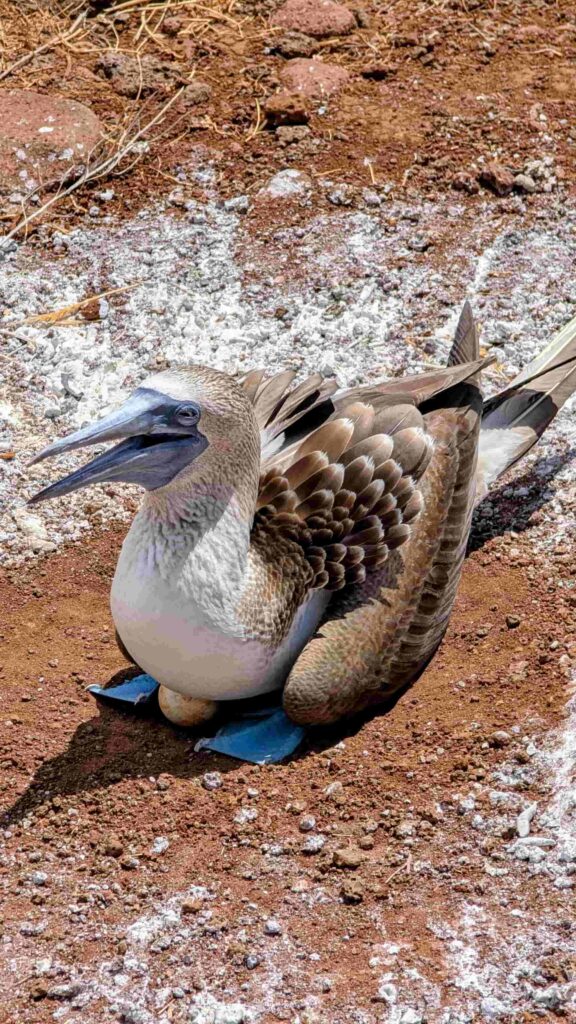
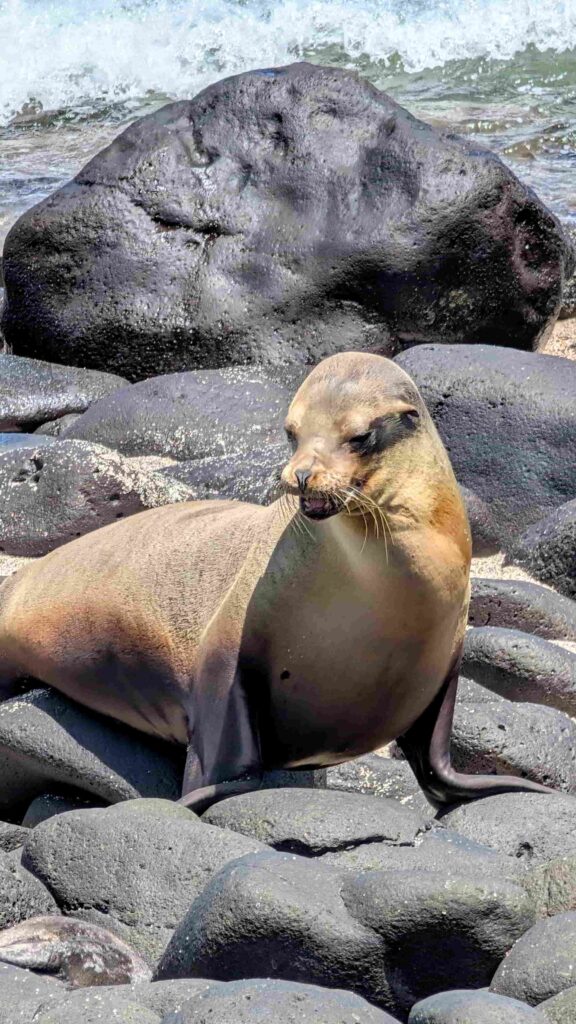
The Wild Wonders of Ecuador & the Galápagos tour starts in Quito with a veganized Ecuadorian cooking class and a homestay with local families in the Yunguilla cloud forest community. Then it’s out to the islands for giant tortoises on Santa Cruz and snorkeling with sea lions off Isla Lobos. Every included meal is vegan, arranged before you arrive.
There are two departures in 2027, August 14 to 23 and December 5 to 14, each capped at 16 travelers. As one past traveler put it, it was great to taste the local cuisine made vegan, “without having to worry about ordering specialty meals with a language barrier.”
Prefer to travel on your own schedule? The Veggies Abroad team also builds custom vegan itineraries for Ecuador and beyond.
Latin America Travel Inspiration
Ready to explore more of Latin America? From Colombia’s colorful cities to Costa Rica’s lush jungles and Mexico’s incredible vegan food scene, there’s so much to discover (and eat)! Check out these guides for more plant-powered travel inspiration.
Colombia Vegan Guide: Is It Vegan-Friendly?
5 Must-Try Vegan Restaurants in Bogotá, Colombia
5 Must-Visit Vegan Restaurants in Medellin
The Best Cities for Vegan Food in Costa Rica
15+ Best Vegan Restaurants in Mexico City + More


